



FHM Pneumatic Forging Hammers (Power Hammers)
The FHM pneumatic forging hammer shapes hot steel with fast, controlled blows: 210 to 240 blows per minute at 50, 60 or 75 kg blow weight. It is self-contained. A compressor cylinder at the back of the machine supplies air to the working cylinder at the front, so no external compressor is needed. This is why the FHM is also known as a self-contained air hammer.
Blacksmiths, ornamental iron workshops and small forging shops use the FHM for open-die work: drawing out, upsetting, cutting, punching and ornamental forging, with interchangeable dies for each job.
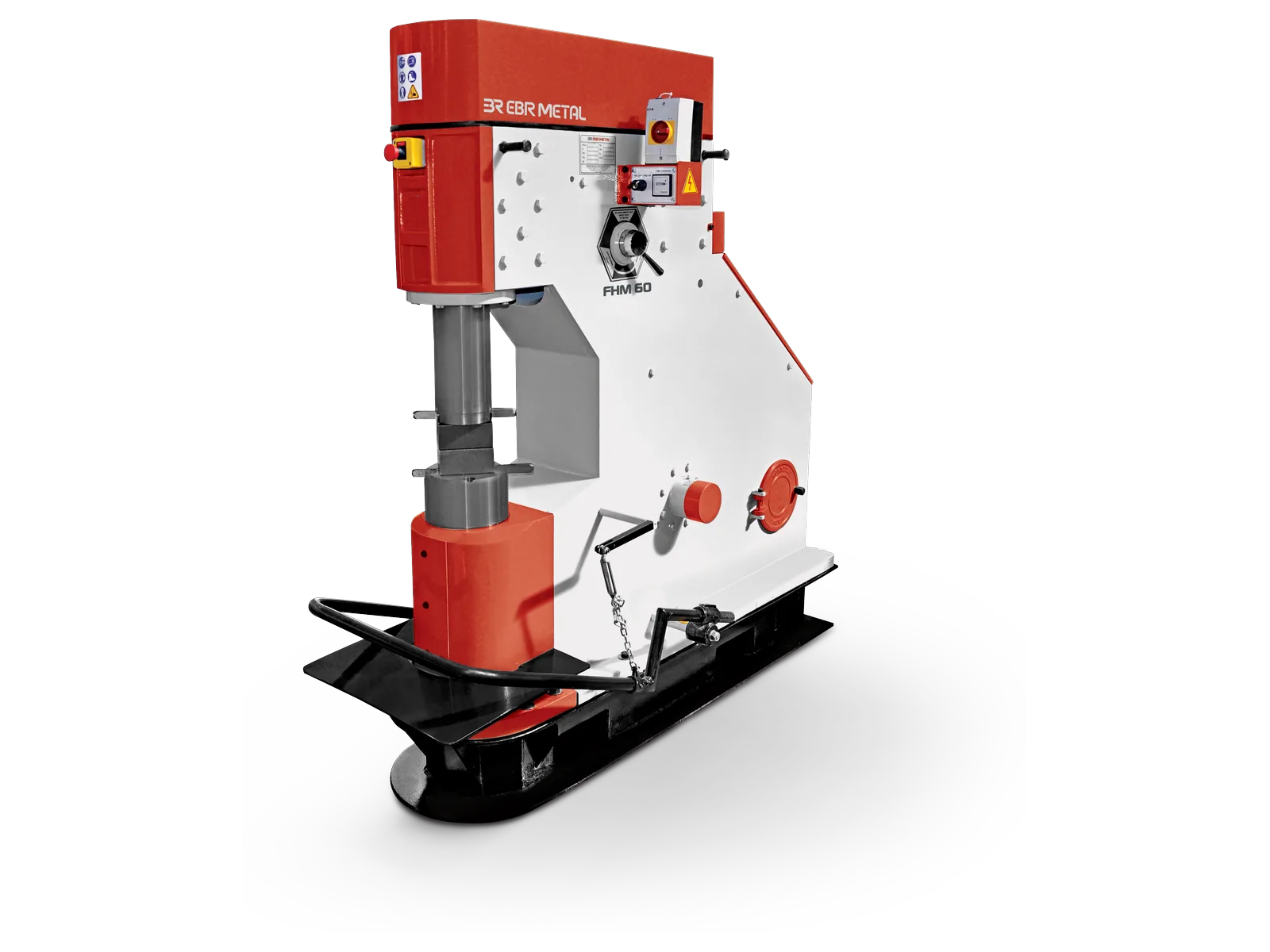
• 3 models • 50–75 kg blow weight • 210–240 blows/min • No external compressor • Interchangeable dies
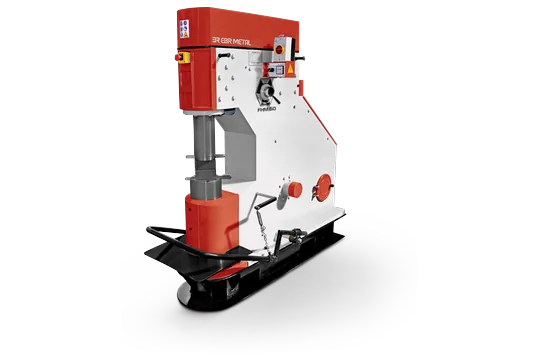
The FHM pneumatic forging hammer shapes hot steel with fast, controlled blows: 210 to 240 blows per minute at 50, 60 or 75 kg blow weight. It is self-contained. A compressor cylinder at the back of the machine supplies air to the working cylinder at the front, so no external compressor is needed. This is why the FHM is also known as a self-contained air hammer.
Blacksmiths, ornamental iron workshops and small forging shops use the FHM for open-die work: drawing out, upsetting, cutting, punching and ornamental forging, with interchangeable dies for each job.
- 3 models
- 50–75 kg blow weight
- 210–240 blows/min
- No external compressor
- Interchangeable dies
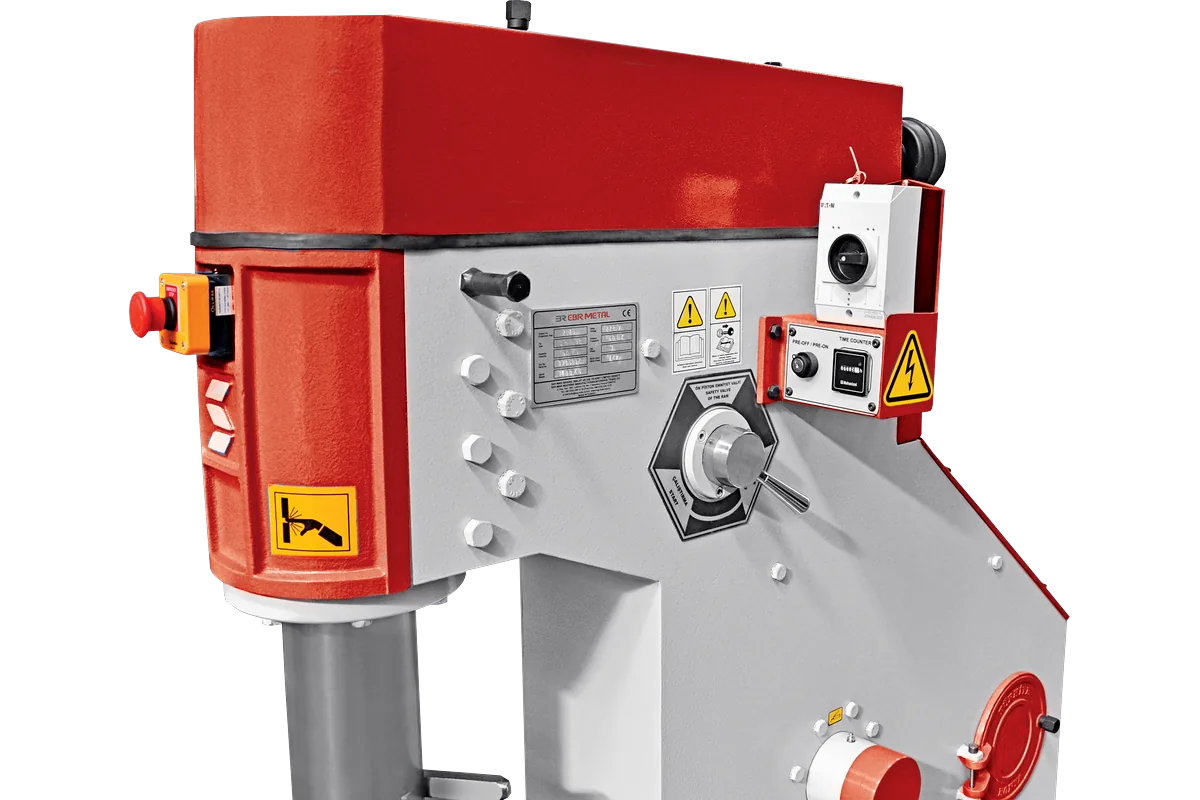
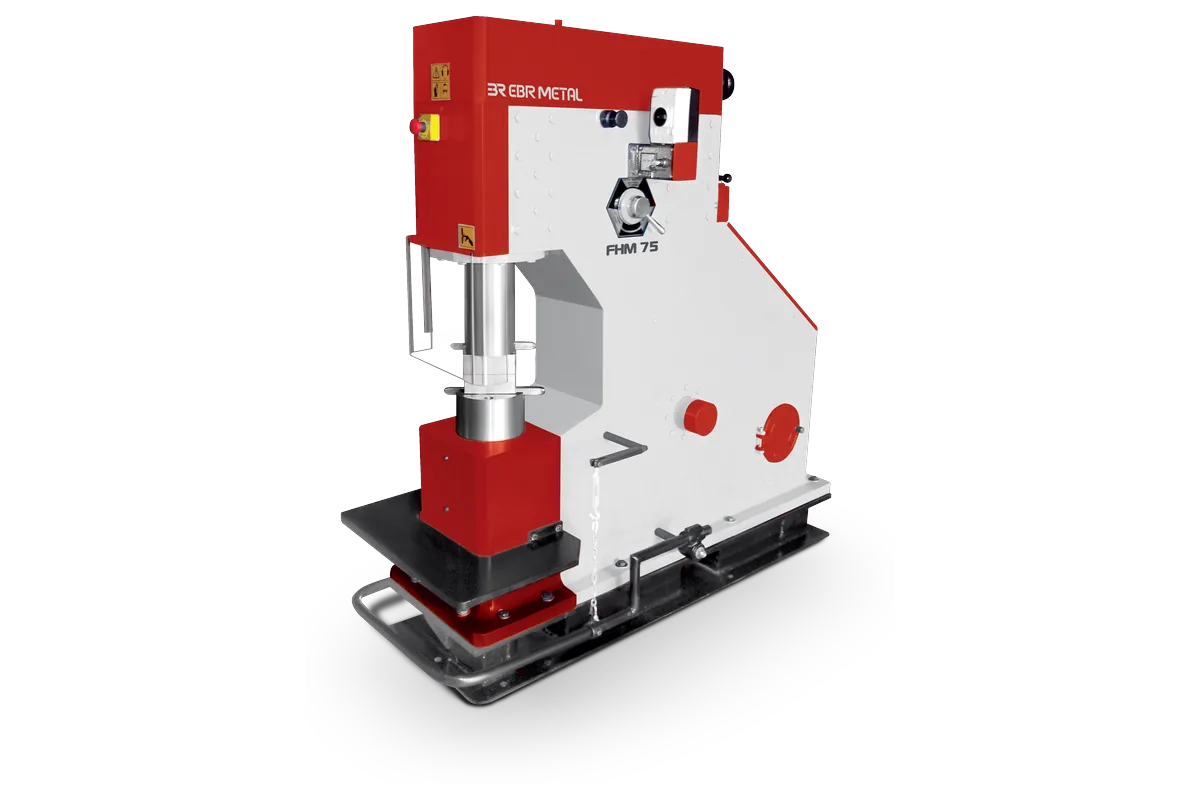
FHM Design
- Frame: welded steel construction.
- Anvil and frame: the anvil and the machine body are separate assemblies, connected by a spring system that limits vibration transfer to the other machine components.
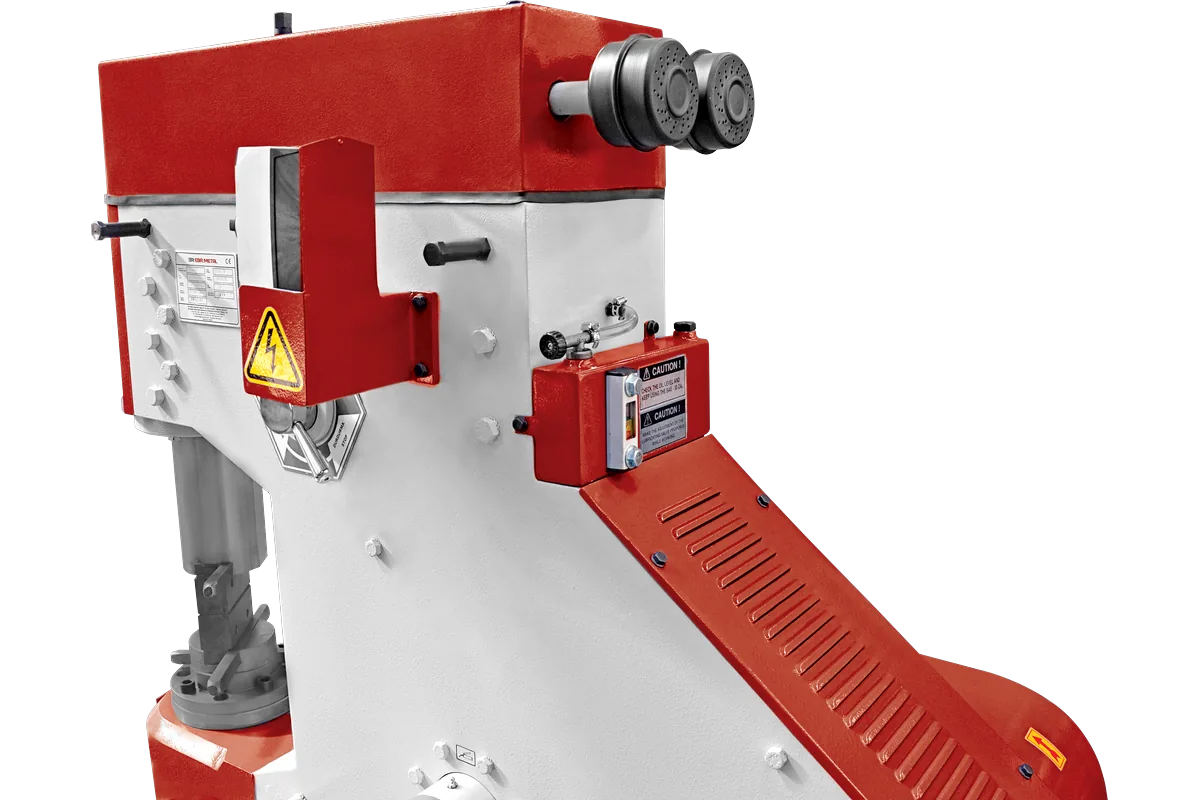
- Maintenance access: an opening side panel gives access to the internal components.
- Drive: the motor drives the compressor cylinder; valves control the air to the working cylinder and set the blow.
- Blow control: regular blows through valve adjustment; foot pedal adjustable to the operator’s working height, with a pedal guard.
- Dies: upper and lower dies are interchangeable. The die holder indexes in 8 directions to match the operator’s working angle. The die holders are split, so they can be set up for left- or right-handed operators; a one-piece holder is available on request.
- Ram: 360° flanged ram with a plexiglass guard.
- Safety: front guard to protect the operator while forging; emergency stop; built to CE requirements.
- Lubrication: lubrication system.
FHM Product Gallery
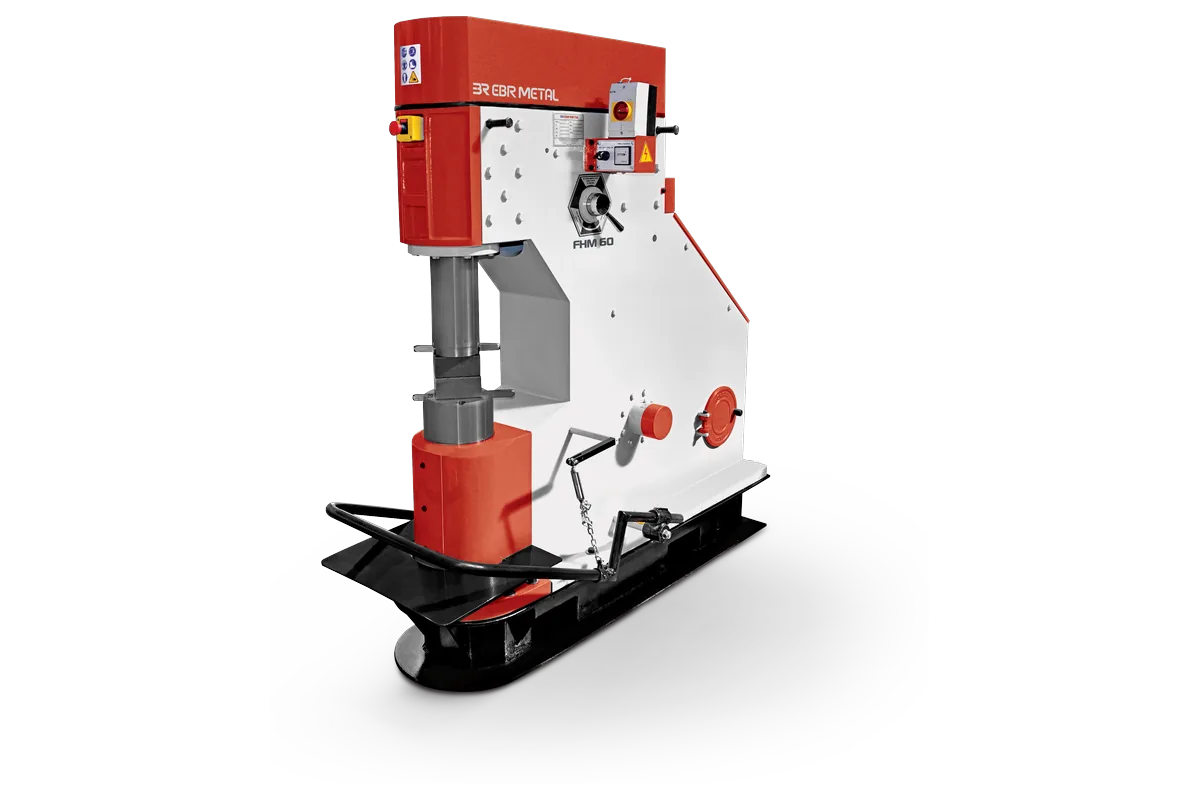
FHM General Features
- Self-contained pneumatic hammer, no external compressor
- Welded steel frame
- Separate anvil, spring-connected to the frame
- Opening side panel for maintenance
- Die holder adjustable in 8 directions
- 360° flanged ram
FHM Standard Equipment
- ED-4 die set (1 upper + 1 lower die)
- Adjustable foot pedal with guard
- Lubrication system
FHM Optional Equipment
- Steel base: filled with sand through a funnel reached from the side panel and fixed to the floor, so no foundation pit is needed
- One-piece die holder
- Additional dies from the ED range (ED-1 to ED-31)
- Special dies made to your part and material
FHM Technical Specifications
| Model | Blow weight (kg) | Blows per minute | Max. stroke (mm) | Motor (kW) | Motor speed (rpm) | Die surface (mm) | Anvil weight (kg) | Dimensions W×L×H (mm) | Approx. weight (kg) |
|---|---|---|---|---|---|---|---|---|---|
| FHM 50 | 50 | 240 | 185 | 4 | 1450 | 150 × 78 | 300 | 750 × 1750 × 1450 | 1000 |
| FHM 60 | 60 | 220 | 220 | 7.5 | 1450 | 150 × 78 | 355 | 760 × 1840 × 1680 | 1300 |
| FHM 75 | 75 | 210 | 220 | 7.5 | 1450 | 150 × 78 | 430 | 820 × 1950 × 1800 | 1800 |
Specifications may change without notice.
FHM Dies
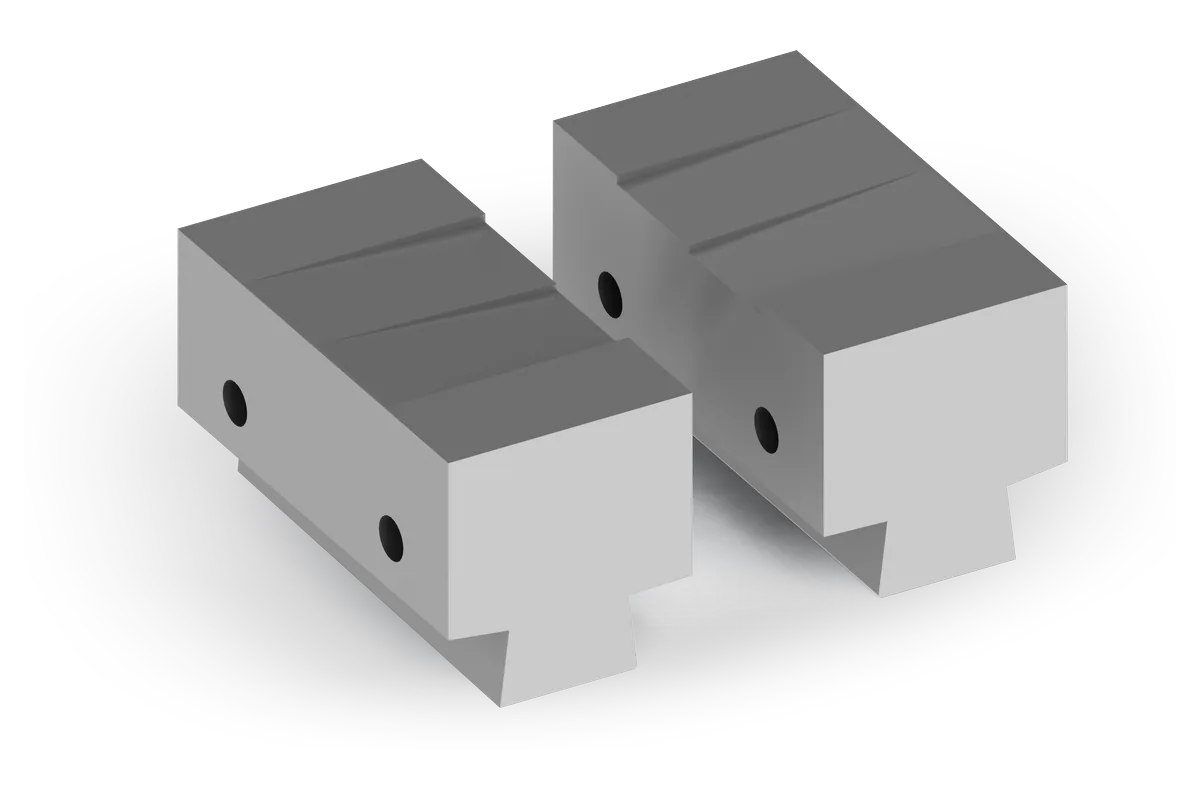
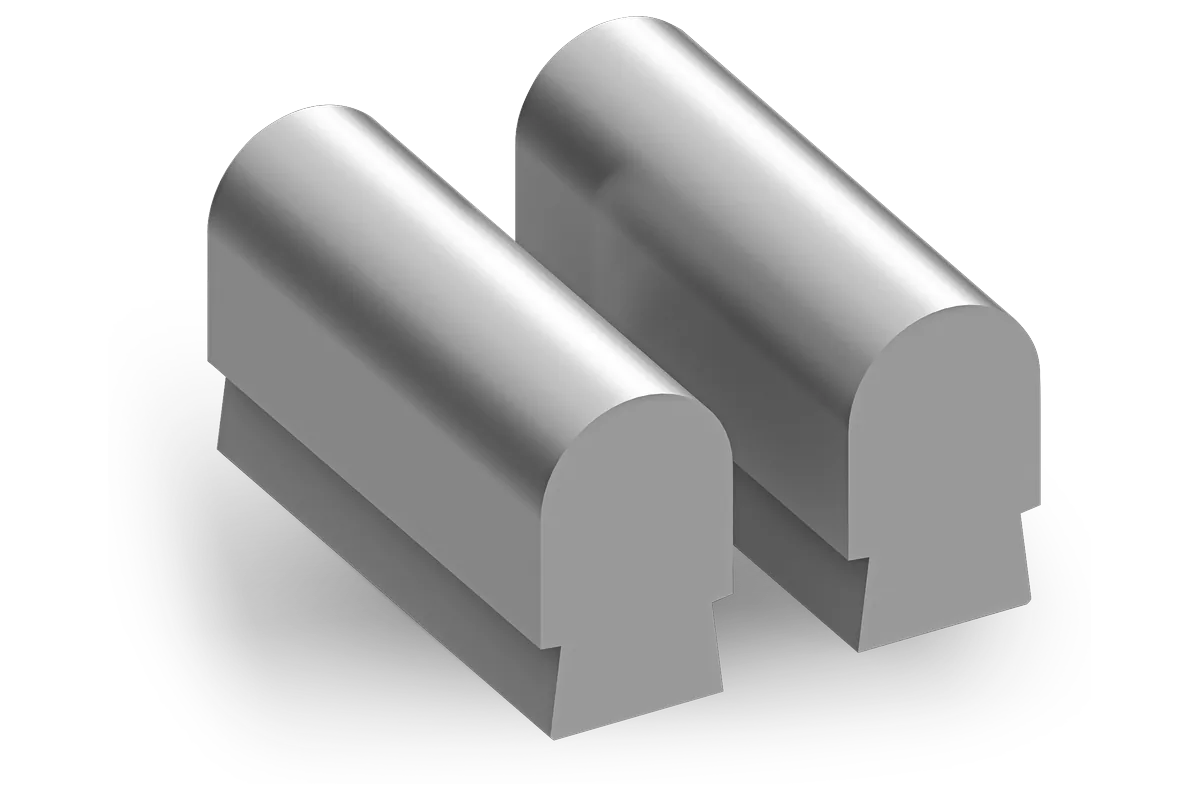
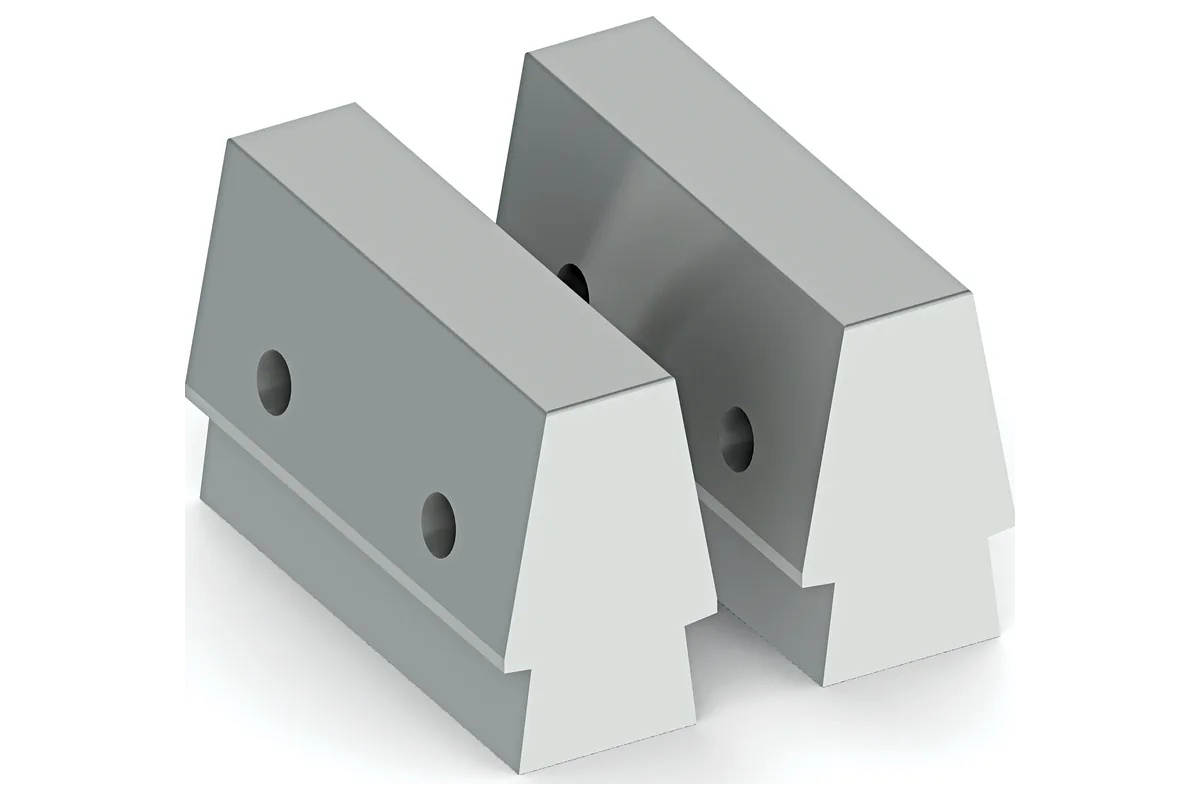
Each interchangeable die set contains one upper and one lower die. The ED-4 set is supplied with the machine. The optional ED range (ED-1 to ED-31) comes in sizes from 83 × 50 × 130 mm to 83 × 78 × 150 mm, plus a Ø108 × 83 mm round die. Frequently selected catalogue dies include ED-4, ED-5, ED-6, ED-7, ED-12, ED-14, ED-15 and ED-16; ornamental iron workshops also select dies from ED-20 to ED-31. Special dies for ornamental and production work are made to the part and the material.
Choosing an FHM Pneumatic Forging Hammer
- FHM 50: 50 kg blow weight, 240 blows/min; for lighter bar and ornamental work.
- FHM 60: 60 kg, 220 blows/min, 7.5 kW; the middle of the range.
- FHM 75: 75 kg, 210 blows/min, the heaviest anvil (430 kg); for larger sections.
The FHM 50 and FHM 60 are the models sold most, to blacksmiths, ornamental iron workshops and small forging shops; FHM hammers work in the USA, Germany and many other countries. Choose by the bar or billet you forge and the work you do most. For closed-die forging or series parts, see the hydraulic and mechanical presses on the forging machines page.
FHM Pneumatic Forging Hammer in Operation
The video shows an FHM 50 at work: the operator controls the blow with the foot pedal while the dies shape the hot bar.
FHM 50 pneumatic forging hammer in operation
Request a Quote for the FHM
Send the material, the starting section and the work you do (drawing, upsetting, ornamental). We will confirm the model and the dies. Every FHM is run and tested before shipment; a test video can be sent on request.
Frequently Asked Questions About FHM
Does the FHM need an external compressor?
No. Every FHM model generates its own working air. The built-in compressor cylinder supplies the working cylinder, so an external compressor is not required.
Which FHM model should I choose?
The FHM 50 and FHM 60 are ordered most. Send the material, the starting section and the forging work, and we will recommend the model and the dies.
What foundation does the FHM need?
EBR METAL supplies foundation and anchor-bolt drawings. The machine is secured to anchors set before the concrete is poured, with felt or rubber between the machine and the foundation, as shown in the drawings. As an option, the machine stands on a sand-filled steel base fixed directly to the floor, which avoids digging a foundation; for many workshops this is enough.
Which dies come with the machine?
The ED-4 die set (one upper and one lower die) is supplied as standard. Other sets from the ED range are optional, and special dies are made to your part and material.
Is a pneumatic forging hammer the same as a power hammer?
Yes. A pneumatic forging hammer is a type of power hammer that uses compressed air to drive the ram, which is why it is also called an air hammer. The FHM makes its own air, so it works as a self-contained power hammer.
What can be made on the FHM?
Open-die forged parts: drawn-out bars, upset ends, punched and cut parts, and ornamental pieces for gates, railings and architectural ironwork.