



Mechanical (Eccentric) Presses
EBR METAL builds mechanical presses for industrial sheet-metal production: eccentric presses for blanking, punching, stamping, forming and shallow drawing. The range includes C-frame and H-frame mechanical presses, available through EBR METAL’s MPC and MPH series, together with engineered-to-order machines and complete press-line solutions.
Standard MPC and MPH models span 15 to 500 tonnes. For larger or application-specific projects, custom mechanical presses can be engineered above 2,000 tonnes. The part, the die, the stroke and the output rate set the final specification.
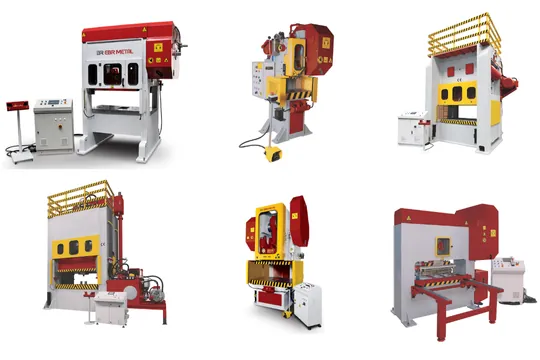
EBR METAL builds mechanical presses for industrial sheet-metal production: eccentric presses for blanking, punching, stamping, forming and shallow drawing. The range includes C-frame and H-frame mechanical presses, available through EBR METAL’s MPC and MPH series, together with engineered-to-order machines and complete press-line solutions.
Standard MPC and MPH models span 15 to 500 tonnes. For larger or application-specific projects, custom mechanical presses can be engineered above 2,000 tonnes. The part, the die, the stroke and the output rate set the final specification.
MPC and MPH Mechanical Press Series
The MPC provides open access for general punching, stamping and forming work. For precision parts that require more even loading across the die, we recommend the MPH with two connecting rods.
How to Choose Between C-Frame and H-Frame Presses
MPC C-frame presses are open at the front, so dies and parts are easy to reach. MPH H-frame presses have a closed frame for larger dies and wider beds, where the load and slide guidance need closer control.
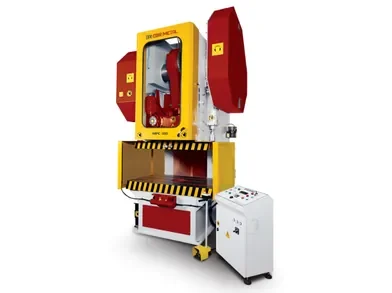
MPC C-Frame Mechanical Presses
Open-front C-frame presses designed for accessible die setting, flexible material handling and efficient punching, blanking, forming and progressive-die operations. Standard models range from 15 to 300 tonnes.
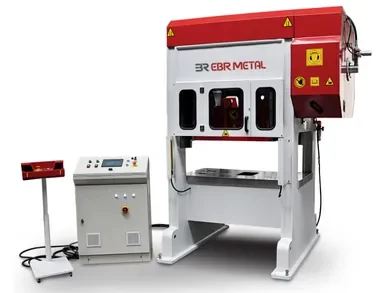
MPH H-Frame Mechanical Presses
Closed-frame mechanical presses developed for larger dies, wider working areas and applications requiring controlled load distribution and guided slide movement. Standard models range from 40 to 500 tonnes.
Mechanical Press Types and Frame Architectures
Choose the mechanical press architecture that matches the part, tooling, working area, production rate and automation layout. MPC C-frame presses prioritize working-area access and a compact footprint, while MPH H-frame presses provide a closed-frame platform for larger dies and wider working areas.
C-Frame and H-Frame Press Architectures
MPC C-frame presses use an open-front structure that provides convenient access to the working area for die setting, material handling and line integration. Available equipment varies by model and selected configuration.
MPH H-frame presses use a closed-frame, straight-side structure suited to larger dies and wider working areas where load distribution and slide guidance require closer control. Special dimensions, strokes and automation configurations are available according to the project.
Other eccentric press types are built on request: A-type monoblock presses from 40 to 300 tonnes, D-type closed-frame presses with adjustable stroke from 80 to 300 tonnes, and long-stroke H-frame presses with a single connecting rod from 125 to 300 tonnes or two connecting rods from 125 to 600 tonnes. EBR METAL also builds sheet perforation presses with servo sheet feeding.
Where the job needs force held through a long stroke or adjustable pressing speed, compare EBR METAL hydraulic presses.
Selection Guide — Size Your Mechanical Press Right
Selecting a mechanical press requires more than matching nominal tonnage to the forming force. The part, material, tooling and production process must be evaluated together with the press working range, available energy, working area and automation requirements.
Selection Checklist
- Required Force and Working Energy
Calculate the operation force and verify that the press can deliver the required force and energy at the intended point in the stroke. - Part, Material and Process
Consider material type and thickness, part geometry and whether the operation involves punching, blanking, bending, forming, drawing or progressive-die production. - Die and Working Area
Check die dimensions and weight, bolster and slide area, shut height, die-height adjustment, stroke length and the space required for loading and maintenance. - Load Distribution and Frame Type
Evaluate whether the load is centred and evenly distributed. Off-centre loading limits depend on the actual frame, slide, bearing and drive design. - Production Rate and Automation
Define the required strokes per minute, feeding method, material flow and integration needs for feeders, decoilers, straighteners, transfer systems or other line equipment. - Safety and Project Configuration
Specify guarding, control functions, overload protection and safety equipment according to the machine configuration, production method and applicable requirements.
Mechanical Press Applications
Mechanical eccentric presses support repetitive sheet-metal operations ranging from individual punching and forming tasks to automated progressive-die production.
Punching, Blanking, Forming and Stamping Operations
Mechanical presses are commonly used for punching holes and profiles, blanking parts from sheet or coil material, bending, embossing, shallow drawing and general forming operations.
For progressive-die production, multiple operations can be completed through consecutive die stations as the material advances through the press. Depending on the project, the press can be integrated with servo feeders, decoilers, straighteners and complete coil lines.
Typical applications include automotive parts, white goods, kitchen equipment and other mass-produced sheet-metal parts such as brackets and fittings.
Materials Processed with Mechanical Presses
Material grade and thickness affect the force, energy, tooling and speed needed for the job.
Sheet and Coil Materials
Commonly processed materials include mild steel, stainless steel, galvanized and coated sheet, aluminium, copper, brass and other suitable metal alloys.
Tensile and shear strength, yield behaviour, thickness, temper, surface coating, grain direction and lubrication can all influence forming force, tool wear, part quality and process stability.
For coil-fed production, strip width, coil weight, material thickness and surface condition must also be considered when selecting the decoiler, straightener, feeder and press-line layout.
Why Choose EBR METAL for Mechanical Presses?
EBR METAL configures mechanical presses around the actual part, tooling and production process. Standard MPC and MPH models are supported by application-specific dimensions, automation equipment and press-line solutions when catalogue specifications are not sufficient.
Engineering, Configuration and Project Support
For applications outside the catalogue range, EBR METAL can develop engineered-to-order presses above 2,000 tonnes, subject to project requirements and engineering evaluation.
Project scope can cover coil feeding lines, decoilers, straighteners, servo feeders and application-specific control and safety systems. Final equipment is defined for the selected model and documented in the technical offer.
EBR METAL also helps with layout planning and technical documentation. Tooling and die support is available on request. After delivery, our service team carries out on-site commissioning and operator training, and connects remotely to presses that have PLC and remote-control capability.
Configure the Right Mechanical Press for Your Application
Share your part drawing, material specification, die information, required production rate and automation needs. EBR METAL will evaluate the appropriate C-frame or H-frame press configuration and prepare a project-specific technical offer.
Frequently Asked Questions About Mechanical Presses
What is a mechanical eccentric press?
A mechanical eccentric press converts the rotary motion of a motor and flywheel into the reciprocating movement of a slide. It is used in industrial sheet-metal production for repetitive punching, blanking, stamping, bending, forming and shallow drawing with dedicated tooling.
What is the difference between C-frame and H-frame mechanical presses?
C-frame presses have an open-front structure that provides easier access to the working area and supports convenient die setting and material handling. H-frame presses use a closed, straight-side structure suited to larger dies and wider working areas where load distribution and slide guidance require closer control.
How do I choose the correct mechanical press tonnage?
Required press force must be calculated from the material, thickness, part geometry and operation. The selected press must also provide sufficient working energy at the intended point in the stroke.
Which operations can mechanical presses perform?
Mechanical presses can perform punching, blanking, stamping, bending, embossing, shallow drawing and general forming operations. Mechanical presses can be used with progressive dies when the press, tooling and feeding system are matched to the job.
Can mechanical presses be integrated with coil feeding lines?
Yes. A mechanical press can be integrated with decoilers, straighteners, servo feeders and other coil handling equipment, selected for the application.
What are the standard capacities of MPC and MPH presses?
Standard MPC C-frame models range from 15 to 300 tonnes, while standard MPH H-frame models range from 40 to 500 tonnes. Available working areas, strokes, speeds and equipment differ by model. EBR METAL can also engineer application-specific mechanical presses above 2,000 tonnes following a detailed project evaluation.
Can a mechanical press operate with off-centre loads?
Off-centre loading capacity cannot be determined from the frame type alone. Permissible load distribution depends on the specific frame, slide, guidance, bearings, drive system and tooling arrangement. Send us the load position with the die drawing so we can check it against the selected machine’s limits.
What information is required to configure a mechanical press?
The evaluation should include the part drawing, material grade and thickness, operation type, required force, die dimensions and weight, stroke, shut height, production rate, loading pattern and automation plan.