



Hydraulic Guillotine Shears
EBR METAL hydraulic shearing machines cut industrial sheet and plate across a range of cutting lengths and capacities.
The range includes two hydraulic guillotine shear families: NC-controlled EHGM-LT and CNC-controlled EHGM with adjustable rake angle. Selecting between them starts with the material to be cut, maximum thickness and required cutting length, followed by the level of control and adjustment needed for the production process.
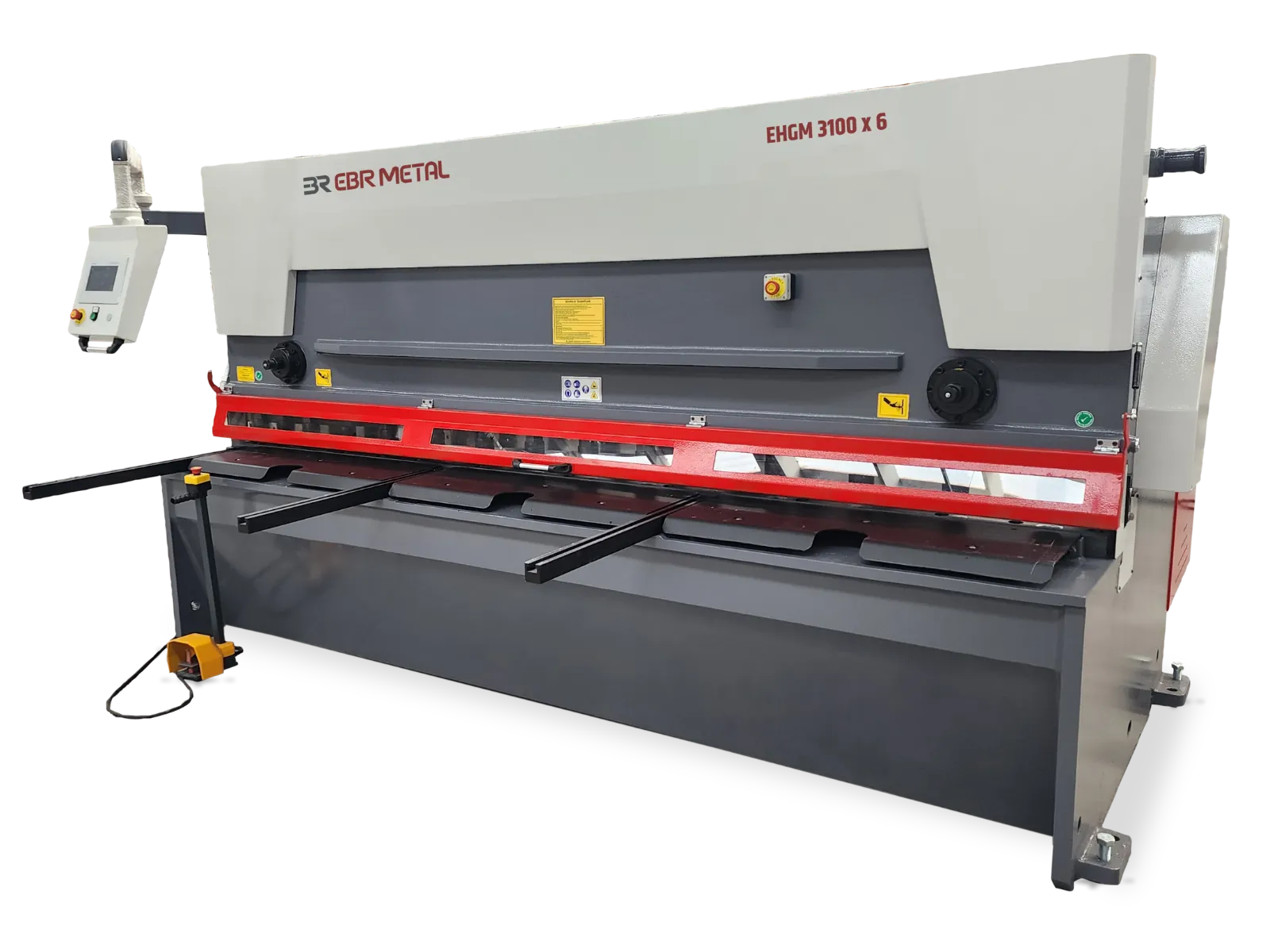
EBR METAL hydraulic shearing machines cut industrial sheet and plate across a range of cutting lengths and capacities.
The range includes two hydraulic guillotine shear families: NC-controlled EHGM-LT and CNC-controlled EHGM with adjustable rake angle. Selecting between them starts with the material to be cut, maximum thickness and required cutting length, followed by the level of control and adjustment needed for the production process.
What Is a Hydraulic Shearing Machine?
A hydraulic shearing machine uses a hydraulically driven cutting system to move the upper blade against a fixed lower blade and produce straight cuts in sheet or plate material.
EBR METAL hydraulic guillotine shears combine hydraulic cutting and hold-down systems with a motorized backgauge for sheet positioning.
Machine selection should not be based on nominal thickness alone. Material type, material strength, required cutting length and thickness all affect the cutting requirement. Cutting length becomes particularly important as higher thickness capacities are required across wider sheets.
Within the EBR METAL range, EHGM-LT provides an NC-controlled hydraulic solution, while EHGM adds CNC control and an adjustable rake angle for applications that require a greater level of process adjustment.
Choose Your Hydraulic Guillotine Shear Machine
EHGM and EHGM-LT provide two levels of hydraulic guillotine shear machine control for different production requirements.
EHGM is EBR METAL’s CNC-controlled variable-rake hydraulic guillotine shear range. With CNC-adjustable rake angle and automatic blade-gap adjustment, EHGM suits production where materials, thicknesses or cutting setups may change regularly.
EHGM-LT provides an NC-controlled hydraulic guillotine shear for more consistent cutting requirements. EHGM-LT is a practical option where the required cutting length and capacity are available without the need for CNC-controlled variable rake and the additional adjustment functions of the EHGM range.
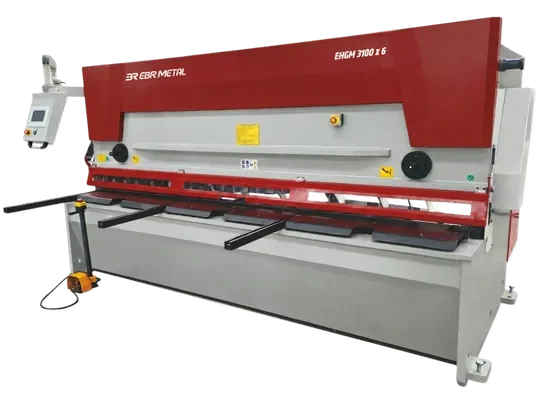
EHGM — CNC Hydraulic Rake Angle Guillotine Shear
The CNC system uses material, thickness and cutting-length inputs to determine key cutting parameters including blade clearance, cutting angle and backgauge positioning.
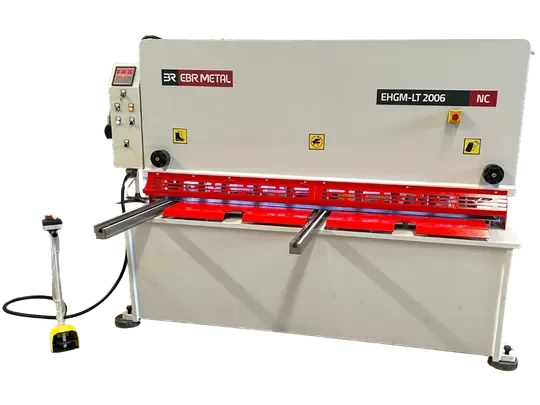
EHGM-LT — NC Hydraulic Guillotine Shear
The machine combines hydraulic cutting with an NC-controlled motorized backgauge and blade-gap adjustment from the controller.
EHGM vs. EHGM-LT Hydraulic Guillotine Shears
| Selection Point | EHGM-LT | EHGM |
|---|---|---|
| Control | NC | CNC |
| Hydraulic cutting | Yes | Yes |
| Rake angle | Fixed by model | CNC adjustable |
| Blade-gap adjustment | From NC controller | CNC controlled / automatically determined |
| Backgauge | 750 mm NC-controlled motorized backgauge | 1000 mm CNC-controlled programmable motorized backgauge |
| Automatic parameter calculation | — | Material, thickness and cutting-length inputs used to determine key cutting settings |
| Backgauge lift-up for parts longer than 1000 mm | Not provided on EHGM-LT according to EBR manufacturer input | Standard |
| Typical selection starting point | More consistent cutting requirements | Frequently changing materials, thicknesses or cutting setups |
Why Blade Gap and Cutting Angle Matter
Sheet thickness is only one part of the shearing process. Blade clearance, often called blade gap, must also be appropriate for the material and thickness being cut.
Incorrect clearance can affect cutting force, burr formation, edge condition and the way the material separates between the blades. This is why changing material or thickness may also require a different blade-gap setting.
Cutting angle is another important process parameter. A raked blade makes the cut progressive rather than engaging the complete cutting length at the same moment, reducing the peak cutting force required from the machine.
More rake is not automatically better. Cutting angle involves a balance between cutting-force requirements and material deformation, so the appropriate setting depends on the cutting conditions.
This is one of the reasons adjustable blade gap and rake angle become useful when a machine is expected to process changing materials, thicknesses and cutting requirements.
NC or CNC Hydraulic Shear?
The choice between NC and CNC should not be made from the controller name alone.
EBR METAL normally begins by evaluating the material, maximum thickness and required cutting length. Typical cutting dimensions and how frequently the production setup changes are also useful when deciding which control level is appropriate.
For many applications, EBR METAL recommends starting the evaluation with the CNC-controlled EHGM range, particularly when materials, thicknesses or cutting dimensions change frequently.
EHGM-LT remains a practical NC alternative for more consistent cutting requirements where the additional adjustment capabilities of the CNC variable-rake machine are not required.
When EHGM-LT May Be the Right Choice
EHGM-LT is designed for applications where NC control provides the required level of operation without the additional process adjustment available on the CNC EHGM.
Its NC system controls the motorized backgauge and allows blade-gap adjustment from the controller.
EHGM-LT can be a suitable starting point when:
– the material and thickness range is relatively consistent;
– cutting dimensions and machine settings do not change frequently;
– a variable rake angle is not required for the application;
– the required cutting length and capacity are available within the EHGM-LT range; and
– a more economical NC configuration is preferred.
When EHGM May Be the Right Choice
EHGM is the CNC-controlled variable-rake range and is particularly relevant when cutting requirements change regularly.
The operator enters information including material type, thickness and cutting length. The CNC system then determines key cutting parameters from the machine’s predefined settings, including cutting angle, blade clearance and backgauge positioning.
This reduces the number of cutting parameters the operator needs to determine and adjust individually when production requirements change.
EHGM can be a suitable starting point when:
– material types or thicknesses change frequently;
– cutting dimensions and setups change regularly;
– adjustable rake angle is important to the cutting process;
– automatic blade-gap adjustment is preferred;
– previous cutting settings need to be stored and recalled;
– parts longer than the standard backgauge travel require the backgauge lift-up function; or
– the required capacity is outside the practical range of the EHGM-LT family.
Cutting Length and Capacity Should Be Evaluated Together
Maximum thickness alone does not determine which type of guillotine shear is appropriate.
A relatively high thickness capacity can be achieved over a shorter cutting length on some motorized direct-gear machines. As higher cutting capacity is required across longer sheet widths, the force, machine structure and cutting-system requirements also increase.
For this reason, EBR METAL evaluates cutting length together with material and maximum thickness rather than applying a single thickness threshold between motorized and hydraulic shears.
If your requirement combines longer cutting lengths with heavier sheet or plate, the hydraulic range becomes an important part of the machine-selection process.
Tell Us the Material, Thickness and Cutting Length
Typical cutting dimensions are useful when selecting a machine because they help determine whether production involves repeated similar cuts or frequent changes in cutting settings.
Where production includes a particularly wide thickness range, minimum sheet thickness may also need to be considered.
A machine’s maximum rated capacity does not by itself establish a universal minimum cuttable thickness, so thin-sheet requirements should be evaluated for the specific machine and application.
Hydraulic Shearing for Industrial Sheet and Plate Cutting
As part of EBR METAL’s Sheet Metal Cutting Machines range, hydraulic guillotine shears are used in sheet and plate preparation across a range of metalworking and manufacturing operations.
Real EBR applications include:
– steel service centres;
– steel construction and steel-product manufacturing;
– steel door production;
– agricultural machinery manufacturing;
– elevator cabin production; and
– crane manufacturing.
Why Choose EBR METAL for Hydraulic Shearing?
Machine Selection Based on the Cutting Requirement
EBR METAL starts with the material, thickness and cutting length, not the controller type.
Separate NC and CNC Hydraulic Ranges
EHGM-LT and EHGM provide two different levels of control, allowing the machine configuration to be matched to how frequently materials, thicknesses and cutting setups change.
Hydraulic Systems for Industrial Cutting
Both families use hydraulic systems with components from established manufacturers including Rexroth or Hoerbiger.
From Machine Family to the Correct Model
Once the appropriate hydraulic family is identified, cutting length, material strength, thickness and equipment requirements can be used to determine the individual machine model and configuration.
Need Help Selecting a Hydraulic Guillotine Shear?
Tell us the material you need to cut, maximum thickness and required cutting length.
If your production includes different materials, a wide thickness range or frequently changing cutting dimensions, include those details as well.
EBR METAL can use this information to help determine whether the NC-controlled EHGM-LT or CNC-controlled EHGM range is the better starting point for your application.
Hydraulic Guillotine Shear FAQ
What information is needed to select a hydraulic shearing machine?
Start with the material to be cut, maximum thickness and required cutting length. Typical cutting dimensions and the range of thicknesses used in production can also help determine the appropriate machine family and control level.
What is the difference between EHGM and EHGM-LT?
EHGM-LT is an NC-controlled hydraulic guillotine shear with a fixed cutting angle by model, while EHGM is a CNC-controlled variable-rake hydraulic guillotine shear. EHGM adds automatic calculation and adjustment of key cutting parameters for applications that require greater process flexibility.
Is a CNC hydraulic shear more difficult to operate than an NC machine?
Not necessarily. On the EHGM, the operator enters information such as material type, thickness and cutting length, and the CNC system determines key cutting settings from predefined machine parameters. This can reduce the number of parameters that must be determined and adjusted individually when production requirements change.
Why does blade gap need to change?
The appropriate blade clearance depends on the material and sheet thickness. Incorrect clearance can affect cutting force, burr formation, edge condition and material deformation, so the setting should match the cutting requirement.
Why is the cutting angle adjustable on EHGM?
Rake angle affects how progressively the blade engages the material and therefore influences peak cutting force and sheet deformation. An adjustable rake allows the cutting angle to be adapted to different cutting conditions rather than relying on one fixed setting.
Does a thicker cutting capacity always mean I need a hydraulic shear?
No. Cutting capacity should be evaluated together with cutting length and material. Some EBR METAL motorized direct-gear machines can provide relatively high thickness capacity at shorter cutting lengths, while hydraulic machines become increasingly relevant when higher cutting capacities are required across longer sheet widths.
Should minimum sheet thickness also be considered?
It can be relevant when one machine is expected to process a wide range of thicknesses. Maximum rated capacity alone does not define a universal minimum cuttable thickness, so very thin-sheet requirements should be discussed for the specific machine and application.
Which machine should I choose if my material and thickness change frequently?
Frequent changes in material, thickness or cutting setup generally strengthen the case for evaluating the CNC-controlled EHGM range because blade gap, rake angle and other cutting parameters can be adjusted through the CNC system. Final selection should still be based on the complete cutting requirement.