



GMM Guillotine Shearing Machine
The GMM 1320 is EBR METAL’s guillotine shearing machine for repetitive cutting of thin sheet metal, using a traditional mechanical drive that combines a belt-and-pulley system with a gear mechanism. It is a cost-effective option, manufactured to order.
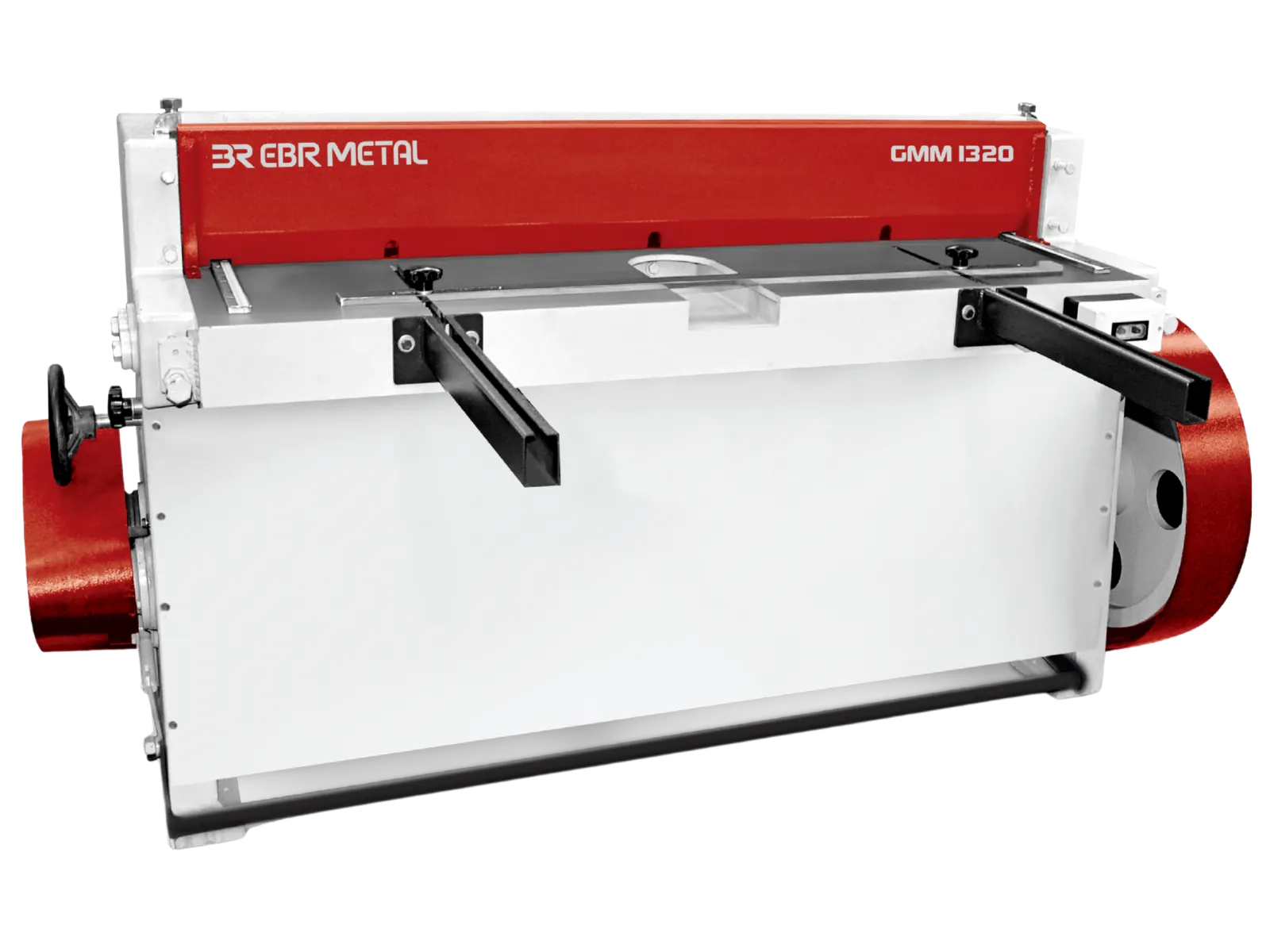
The GMM 1320 is EBR METAL’s guillotine shearing machine for repetitive cutting of thin sheet metal, using a traditional mechanical drive that combines a belt-and-pulley system with a gear mechanism. It is a cost-effective option, manufactured to order.
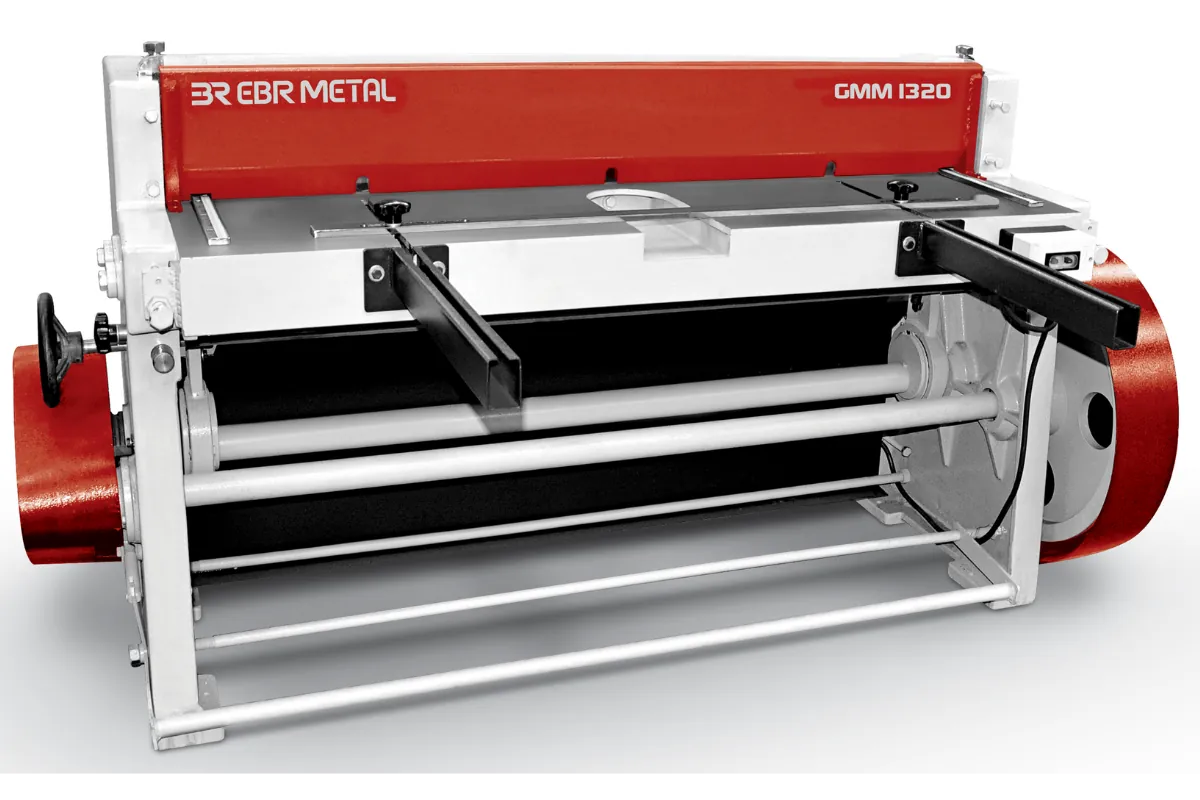
Flywheel / Excenter Drive System
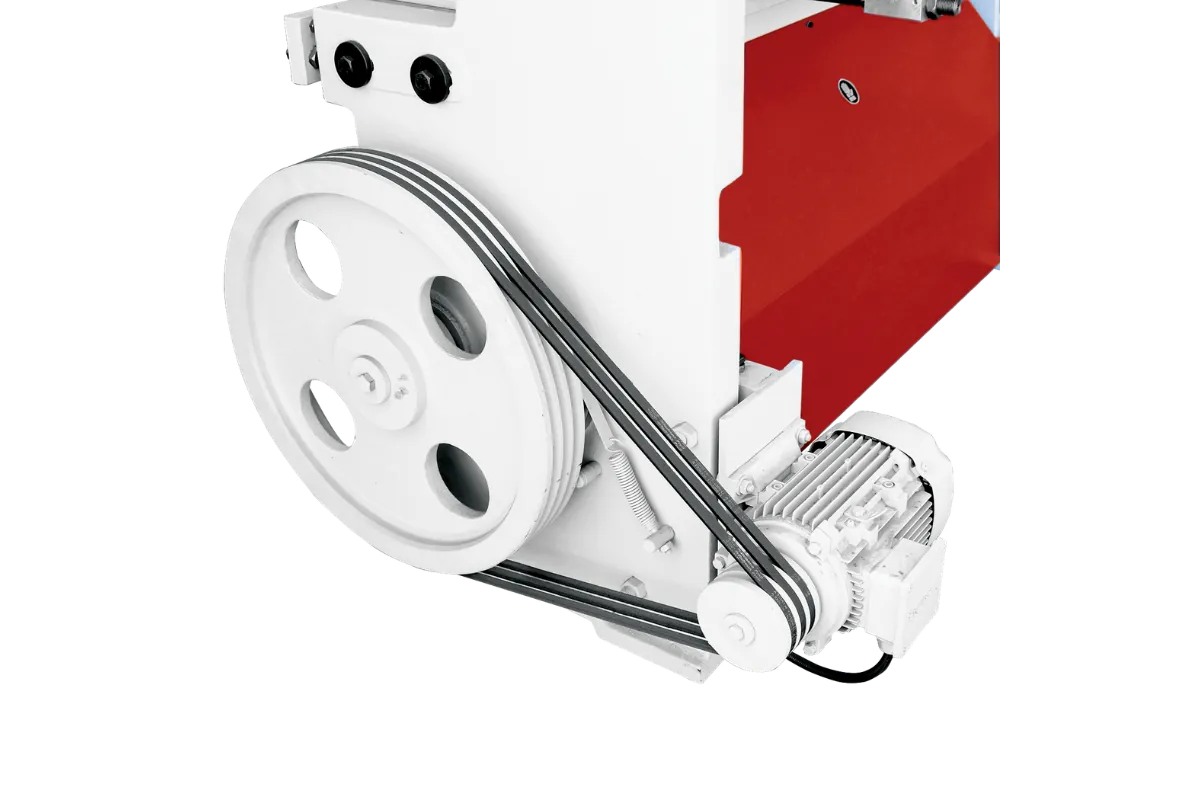
The GMM is a traditional flywheel guillotine shear, also referred to as an eccentric or excenter guillotine. Its motor drives a pulley-and-belt arrangement that transmits and adjusts rotational speed into the machine’s gear mechanism, which in turn develops the force needed for the cutting stroke. This arrangement distinguishes the GMM from EBR METAL’s Direct Gear guillotine shears, which use a gear-driven mechanical system.
GMM Guillotine Shear Gallery
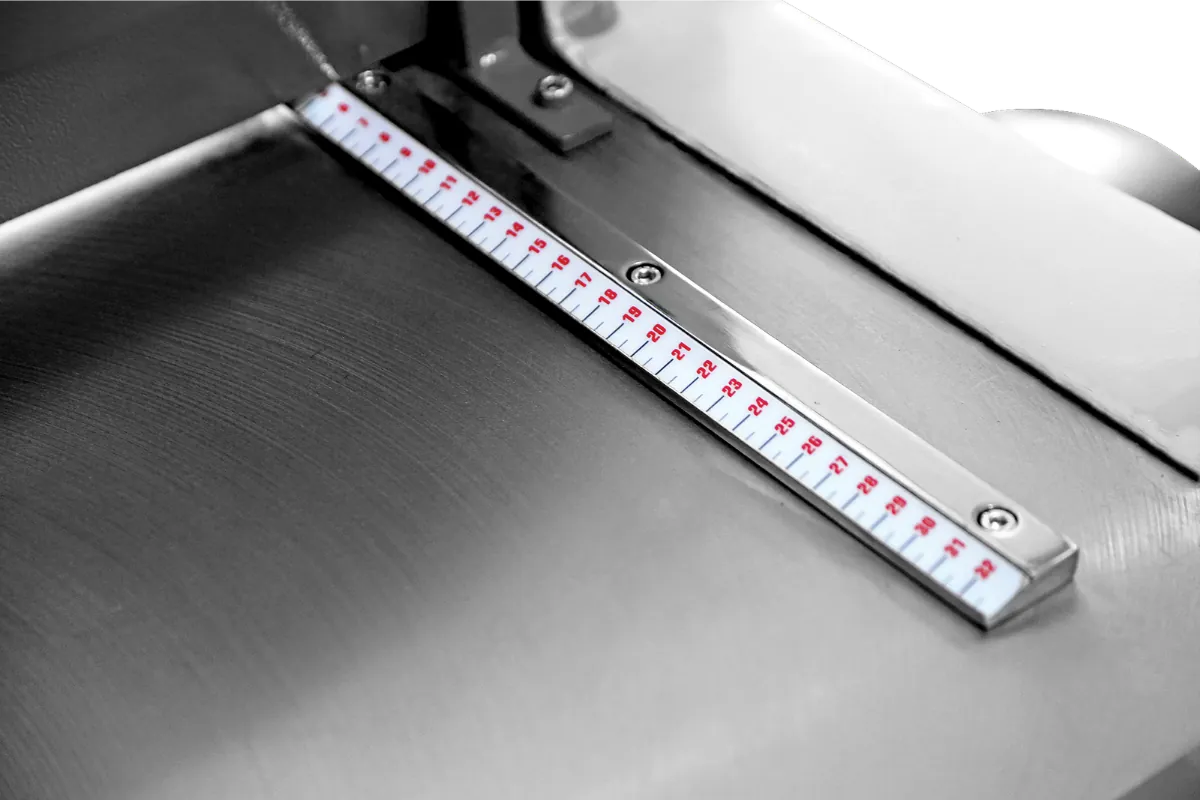
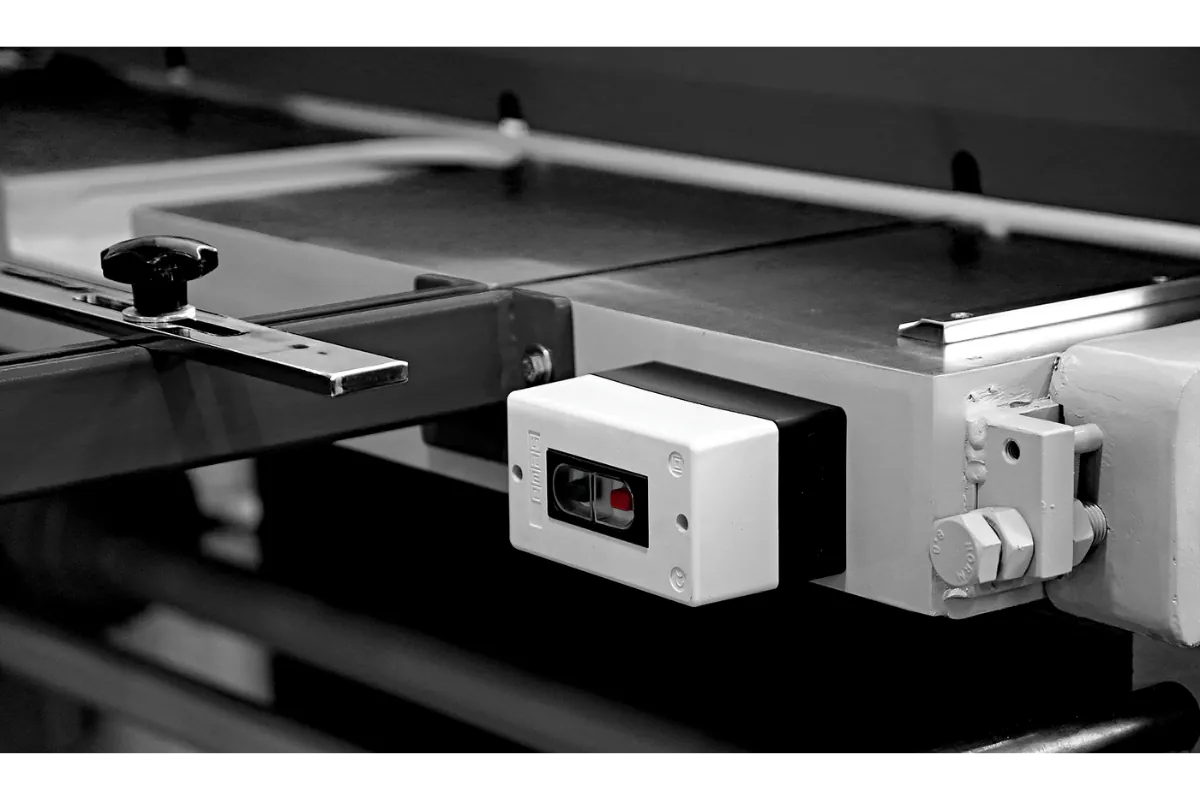
A closer look at the GMM’s construction and main mechanical features.
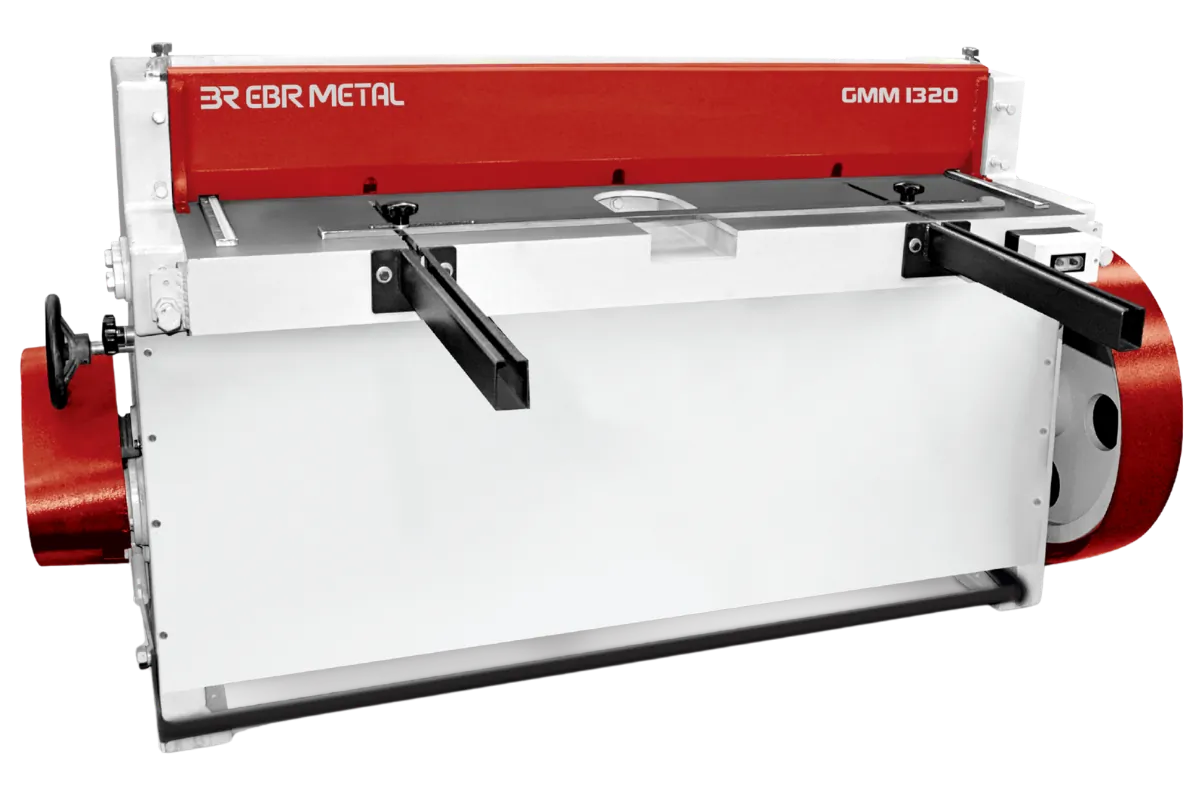
Standard Equipment and Machine Construction
The GMM features welded steel construction and includes the following standard equipment:
- High carbon, high chrome cutting blades — two-edged upper blade and four-edged lower blade
- Manual back gauge with 750 mm stroke
- Front sheet holding arms
- Squaring arm with ruler
- Foot pedal
GMM 1320 Technical Specifications
| Model | Shearing Length (mm) | Shearing Capacity (mm) | Strokes Per Minute | Motor Power (kW) | Back Gauge Length (mm) | Machine Length (mm) | Machine Width (mm) | Machine Height (mm) | Weight (kg) |
|---|---|---|---|---|---|---|---|---|---|
| GMM 1320 | 1320 | 2.5 | 50 | 3 | 750 | 1550 | 840 | 1200 | 900 |
The GMM 1320 has a nominal shearing capacity of 2.5 mm, rated on ST37/S235JR carbon steel (approximately 370–400 N/mm²).
- Actual cutting suitability depends on material tensile strength and sheet thickness.
- The GMM’s standard electrical supply is 380/400 V, 3-phase, 50/60 Hz.
- EBR METAL reserves the right to make changes in product models and technical specifications without prior notice.
Mechanical Sheet Hold-Down System
The GMM uses a spring-loaded mechanical sheet hold-down system connected to the machine’s upper cutting beam. During the cutting cycle, the hold-down system first applies pressure to the sheet, and the cutting action follows once the sheet is held in place.
Manual Back Gauge for Repetitive Cutting
A manual back gauge with a 750 mm stroke is standard on the GMM, using a rack-and-pinion arrangement to position the sheet for repeat cuts at the same dimension. Because this is a mechanical system, gear pitch and play can affect dimensional repeatability compared with EBR METAL’s more modern direct-gear solutions. Where extremely tight repeatability is required, EBR METAL typically recommends evaluating a Direct Gear guillotine shear instead.
Cutting Capacity and Materials
The current GMM 1320 has a nominal shearing capacity of 2.5 mm, rated on ST37/S235JR carbon steel (approximately 370–400 N/mm²), consistent with the capacity basis used across EBR METAL’s mechanical guillotine shear range. Stainless-steel capacity is lower than the carbon-steel rating and depends on the specific grade and tensile strength. EBR METAL does not recommend the GMM for sustained or long-term stainless-steel cutting. For regular stainless-steel work, other EBR METAL guillotine shears are generally a better fit.
Guillotine Shear Blades
The GMM uses high carbon, high chrome cutting blades. The upper blade provides two usable cutting edges and the lower blade four, allowing additional cutting edges to be brought into use by repositioning the blades.
When to Choose the GMM Guillotine Shearing Machine
The GMM guillotine shear machine is a good fit where thin sheet metal is the main material range and the work involves repetitive cutting or frequent cutting cycles. It suits buyers for whom cost-effective investment and manual backgauge positioning are practical priorities, including workshops that prefer or are already familiar with traditional flywheel/excenter operation. The GMM is best suited to applications where ultra-tight dimensional repeatability is not the main production criterion.
Typical applications include:
- Thin sheet metal cutting
- Repetitive cutting and frequent cutting cycles
- Small workshop operations
- Tag and label cutting
This makes the GMM a practical guillotine metal shearing machine for routine thin-sheet cutting applications.
GMM or Direct Gear Guillotine?
EBR METAL manufactures several types of guillotine shearing machines, built on different drive systems. The GMM and the Direct Gear range are both mechanical, non-hydraulic options, chosen for different cutting priorities:
| Factor | GMM | Direct Gear |
|---|---|---|
| Drive system | Flywheel/excenter with belt-and-pulley and gear mechanism | Gear-driven mechanical system |
| Typical application | Thin sheet, repetitive cutting with frequent cycles | Broader range of sheet thicknesses and cutting requirements |
| Dimensional repeatability | Manual rack-and-pinion back gauge; gear pitch/play can affect repeatability | Generally better dimensional repeatability |
| Operating profile | Traditional flywheel/excenter mechanical system | Gear-driven mechanical system with greater operating stability |
| Maintenance | Regular lubrication and mechanical inspection of the flywheel/excenter system | Lower maintenance requirement |
| Capacity / model range | Single current model (GMM 1320) | Broader capacity and model range |
| Selection priority | Cost-sensitive, defined thin-sheet applications | Broader capability, dimensional repeatability, stability and lower-maintenance priorities |
For cutting requirements beyond the range suited to a mechanical guillotine shear, a Hydraulic Guillotine Shear may be the appropriate choice. EBR METAL can help confirm the right machine for your material, thickness and production volume.
Maintenance of the Flywheel / Excenter System
The GMM’s mechanical flywheel/excenter system requires regular lubrication and periodic mechanical checks. This includes lubrication of moving mechanical components, bearing lubrication and greasing, slide lubrication, checking belt condition and tension, checking mechanical and gear play, and general mechanical inspection.
Insufficient lubrication can, over time, contribute to wear in bearings, slides and related mechanical components.
Discuss Your Sheet Metal Cutting Requirement
To help EBR METAL confirm whether the GMM or another guillotine shear is the right fit, share your material type, thickness, required cutting length, expected cutting quantity and required dimensional accuracy. EBR METAL will review this information and recommend the appropriate machine for your application.
Frequently Asked Questions About the GMM
What is a flywheel guillotine shearing machine?
A flywheel guillotine shearing machine is driven by a flywheel and excenter arrangement rather than a direct gear drive. The motor turns a belt-and-pulley system connected to a gear mechanism, which produces the cutting force.
How is the GMM different from a direct gear guillotine shear?
The GMM uses a flywheel/excenter drive, while EBR METAL’s Direct Gear guillotine shears use a gear-driven mechanical system. Direct Gear machines generally offer greater stability, higher cutting quality and better repeatability; the GMM remains a straightforward choice for thinner-sheet, repetitive cutting.
What is the cutting capacity of the GMM 1320?
The GMM 1320 has a nominal shearing capacity of 2.5 mm on carbon steel, on an ST37/S235JR basis. Stainless-steel capacity is lower and depends on the material grade, and EBR METAL does not recommend the GMM for sustained stainless-steel cutting.
When should I choose the GMM for sheet metal cutting?
The GMM suits thin sheet metal cutting with repetitive cuts and small-workshop use, where extremely tight dimensional accuracy is not the priority. For greater stability or repeatability, consider a Direct Gear guillotine shear; for capacity beyond the mechanical range, a Hydraulic Guillotine Shear may be more suitable.
What maintenance does a flywheel/excenter guillotine require?
The GMM’s flywheel/excenter system needs regular lubrication, bearing and slide greasing, and periodic checks of belt condition and mechanical/gear play. Insufficient lubrication can contribute to wear in bearings and slides over time.