



EDBM NC Press Brake
EBR METAL’s EDBM is a hydraulic NC press brake built around a motor-adjusted mechanical-stop ram, with NC-controlled X-axis backgauge positioning and NC-controlled Y-axis angle setting. It offers repeatable, programmable bending without the independently controlled multi-axis setup of a full CNC machine, and it is available in five models from 30 to 135 tons.
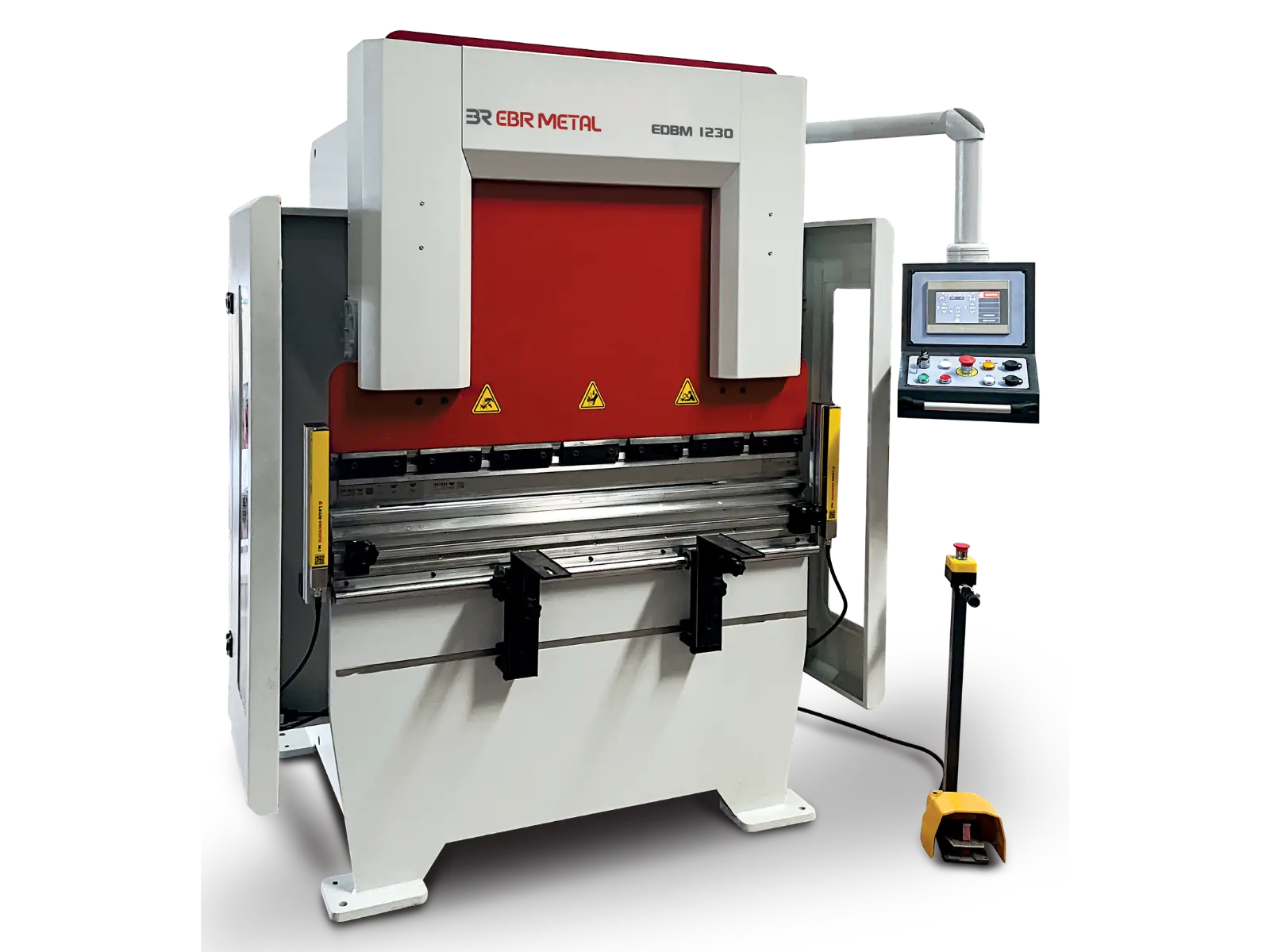
• NC controlled hydraulic press brake • Two Axis (X, Y)
EBR METAL’s EDBM is a hydraulic NC press brake built around a motor-adjusted mechanical-stop ram, with NC-controlled X-axis backgauge positioning and NC-controlled Y-axis angle setting. It offers repeatable, programmable bending without the independently controlled multi-axis setup of a full CNC machine, and it is available in five models from 30 to 135 tons.
- NC controlled hydraulic press brake
- Two Axis (X, Y)
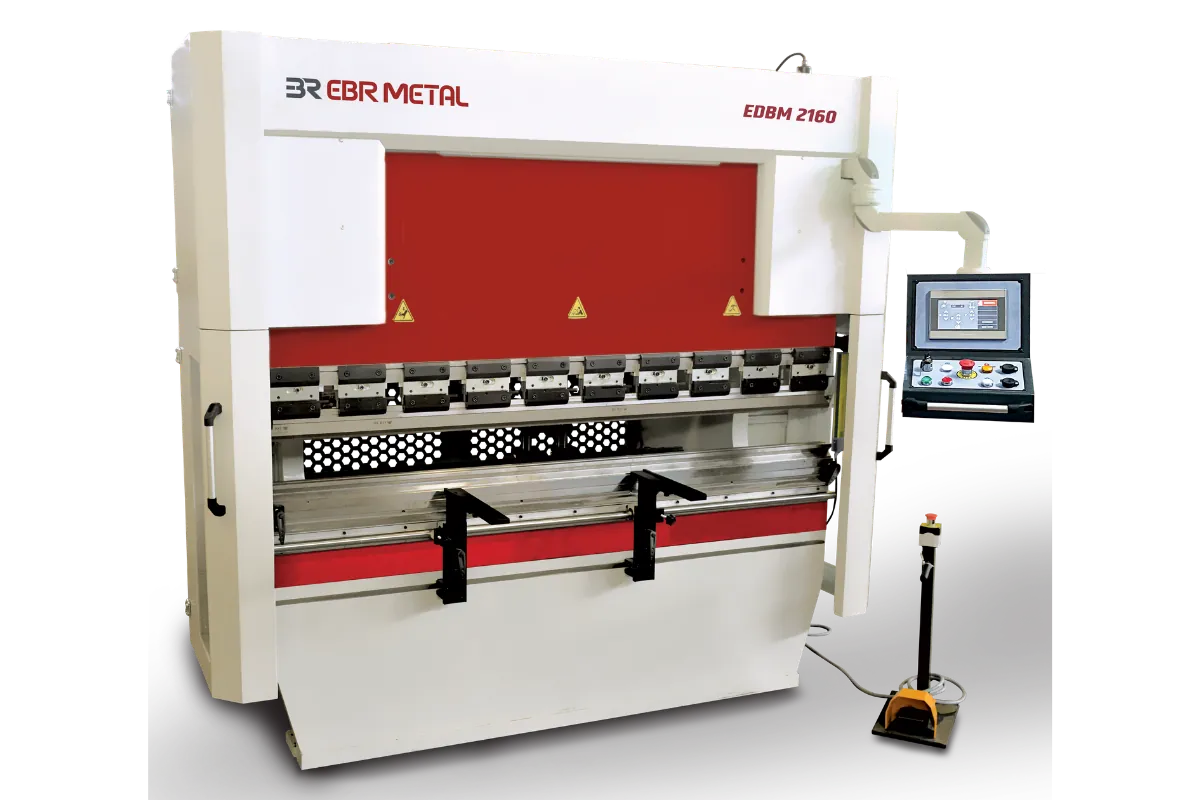
Who EDBM Is For
EDBM suits shops that bend parts with mostly fixed, repeated angles, using a single common Y-axis setting and a motor-adjusted mechanical-stop ram, rather than jobs that call for the independently controlled and synchronized ram sides of a CNC press brake. EBR METAL’s EPBM CNC press brake series controls the two sides of the ram independently as Y1 and Y2, giving finer control over ram parallelism and side-to-side correction. EPBM also adds programmable axes for more advanced or more varied production.
Typical work includes Z-shaped bends and tray-type sheet metal parts folded on three or four sides — jobs common in small and mid-sized fabrication shops that need repeatable NC-controlled setup for these jobs without requiring an independently controlled CNC axis configuration. EDBM 1230, the smallest model in the current range, is generally positioned at a lower price point than a comparable CNC press brake.
For parts that need independent Y1/Y2 control, more complex programmed work, or higher-repeat production requirements, see the EDBM-to-EPBM guidance below.
EDBM Product Gallery
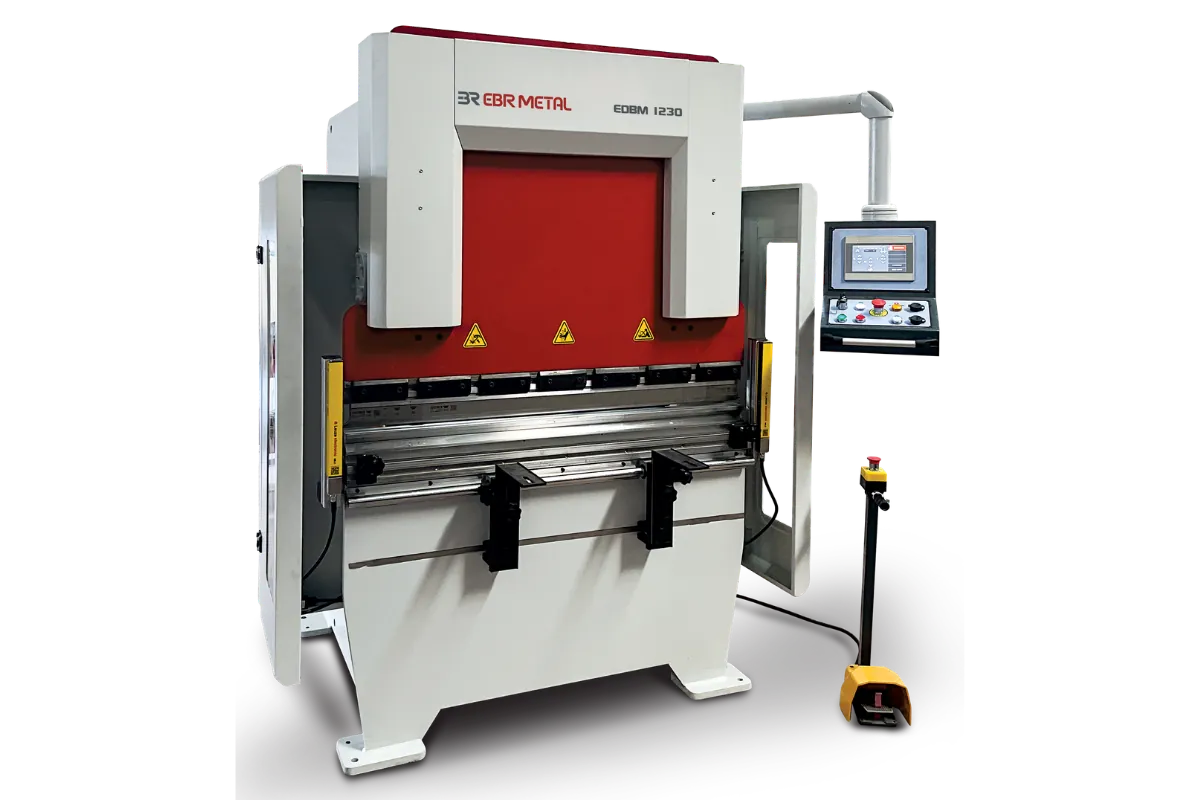
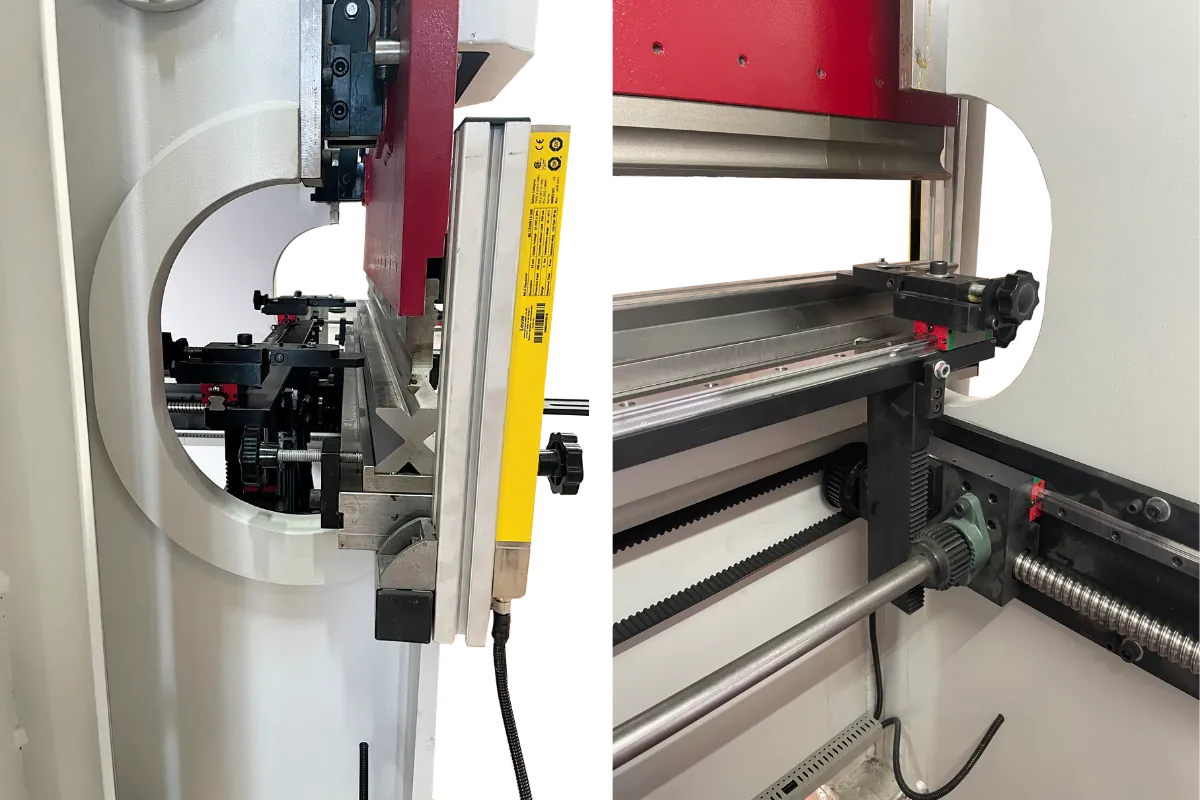
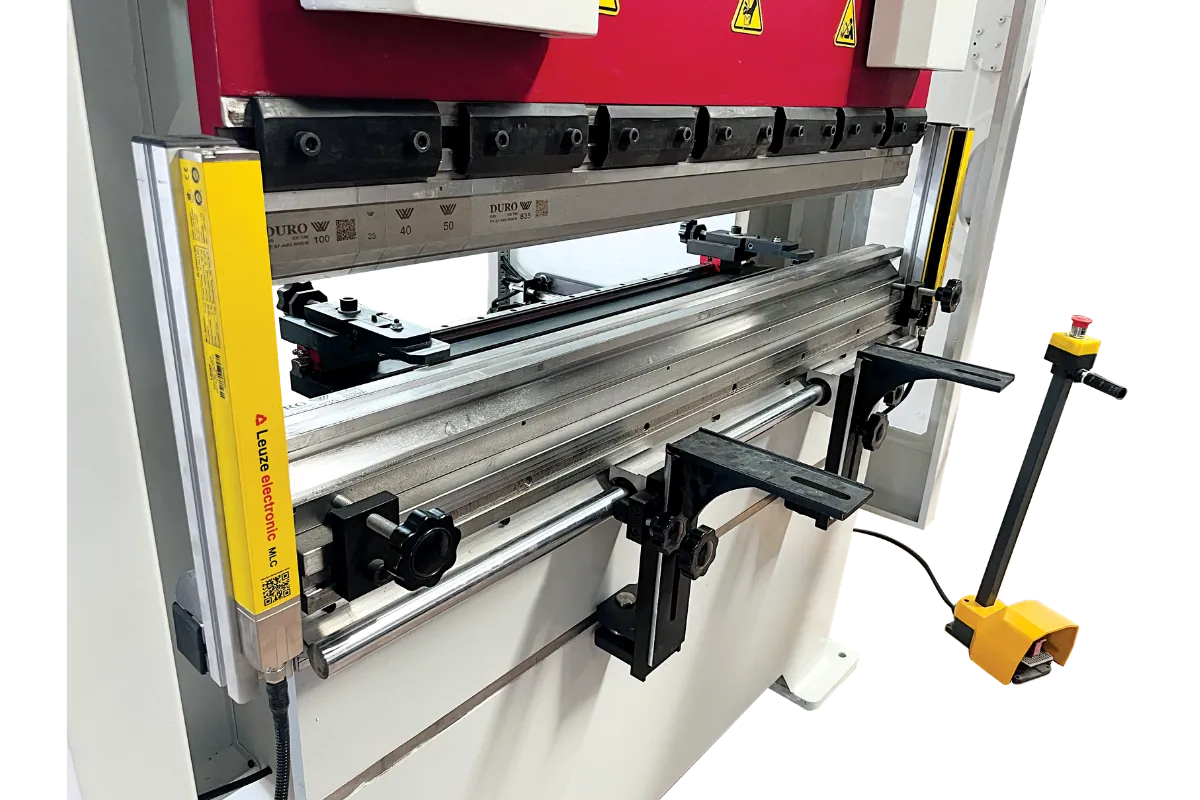
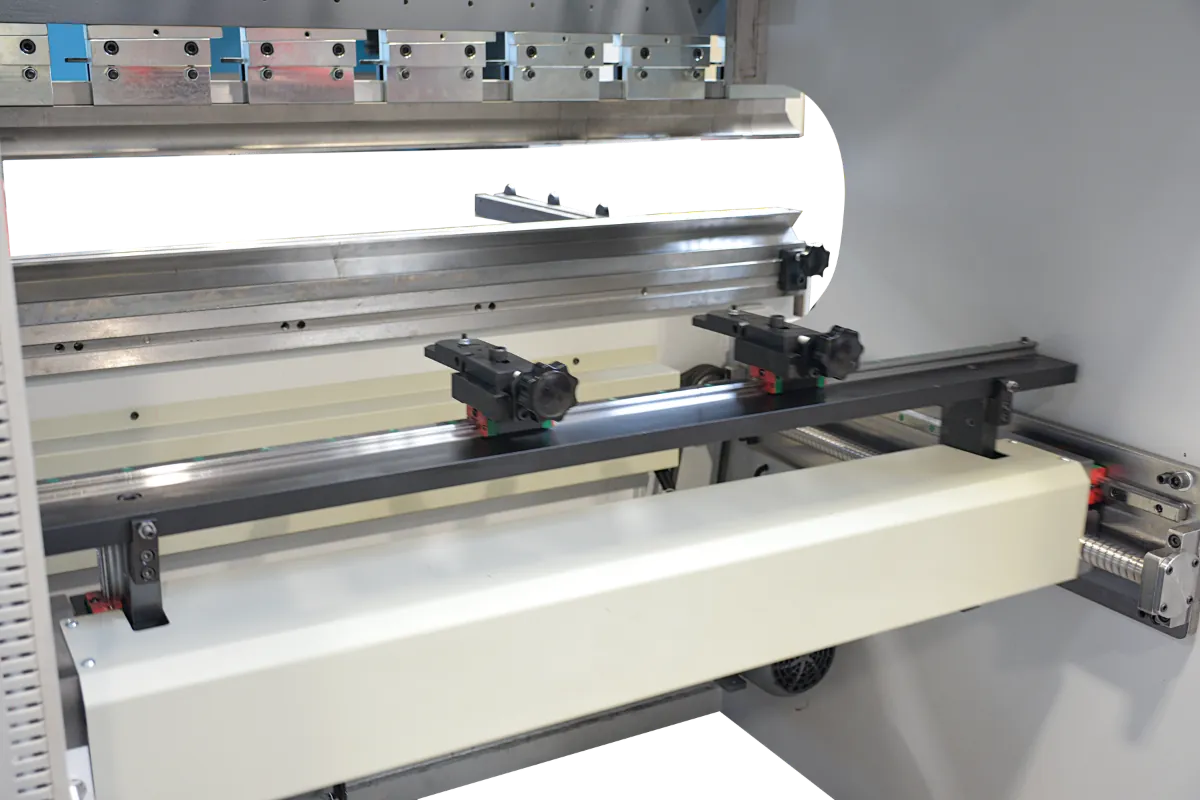
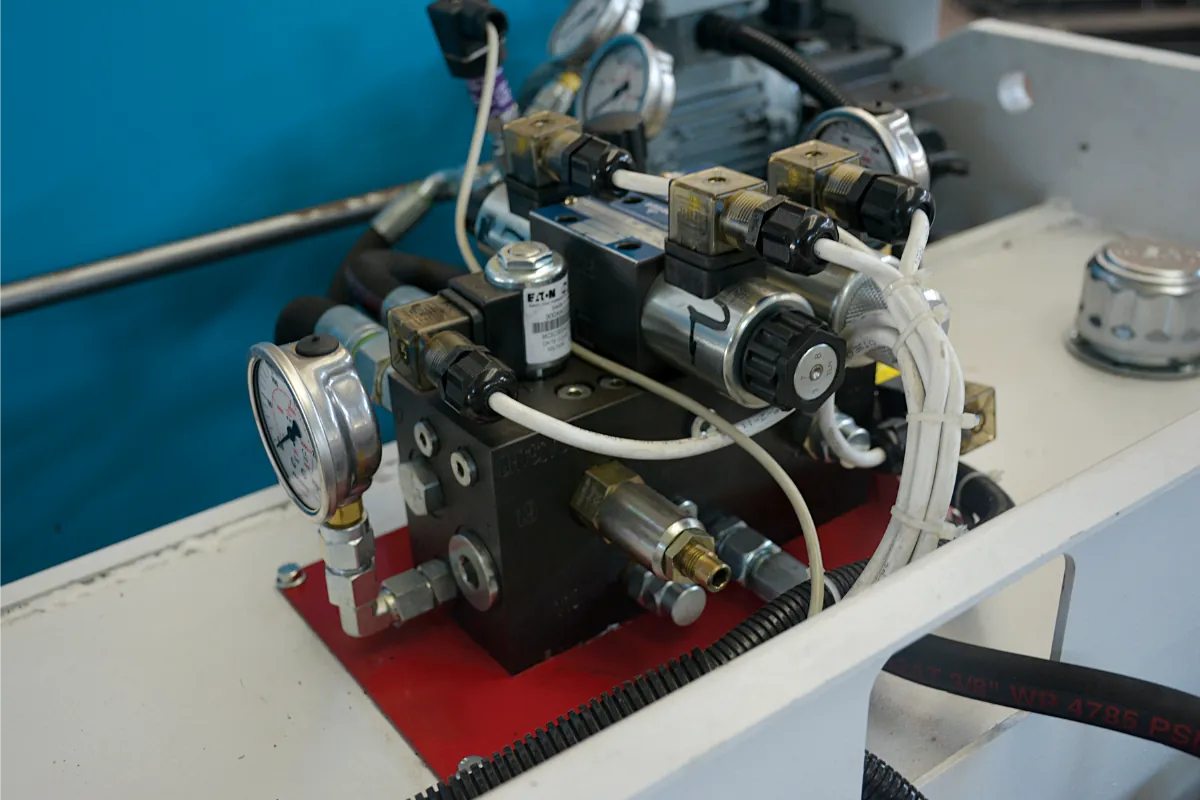
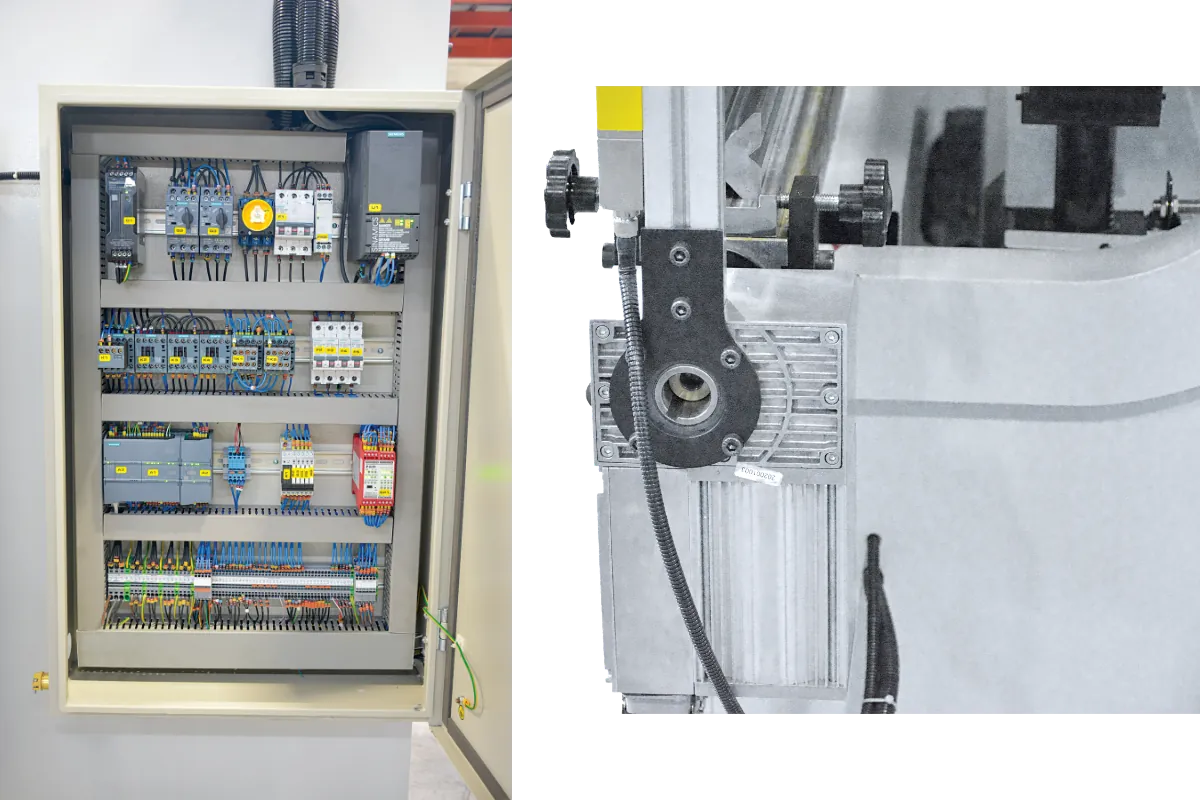
Standard Configuration
Every current EDBM model (1230, 1540, 2160, 2690, 3135) includes as standard:
Bending system and structure
– Double-cylinder bending system on the upper table
– Upper table movement supported by adjustable fiber slide bearings
– Balancing spindle and eccentric bearings that support parallelism
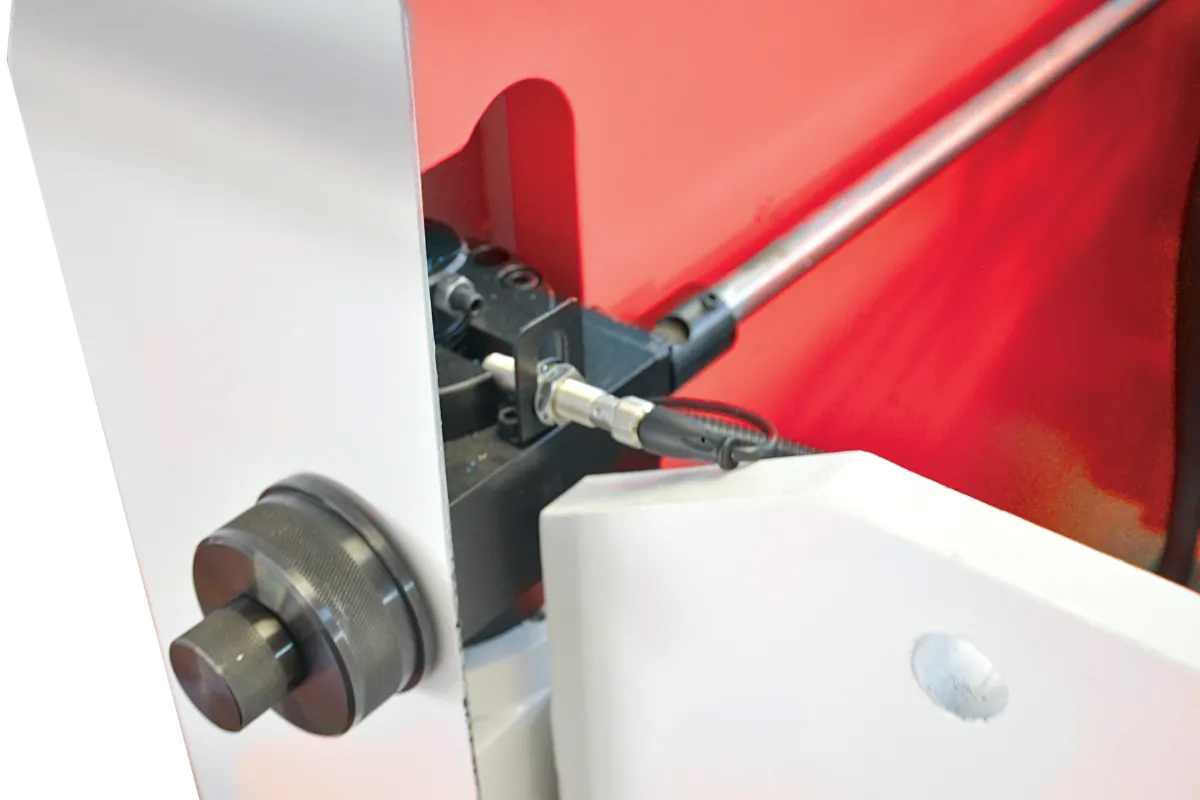
– Motor-adjusted mechanical-stop stroke and angle adjustment mechanism
– Tonnage adjustment and lower-stroke-point stop through the NC control unit
– Hydraulic safety system against excessive pressure rise
– Double-speed working cycle: free fall, slow bend and fast return
Control and axes
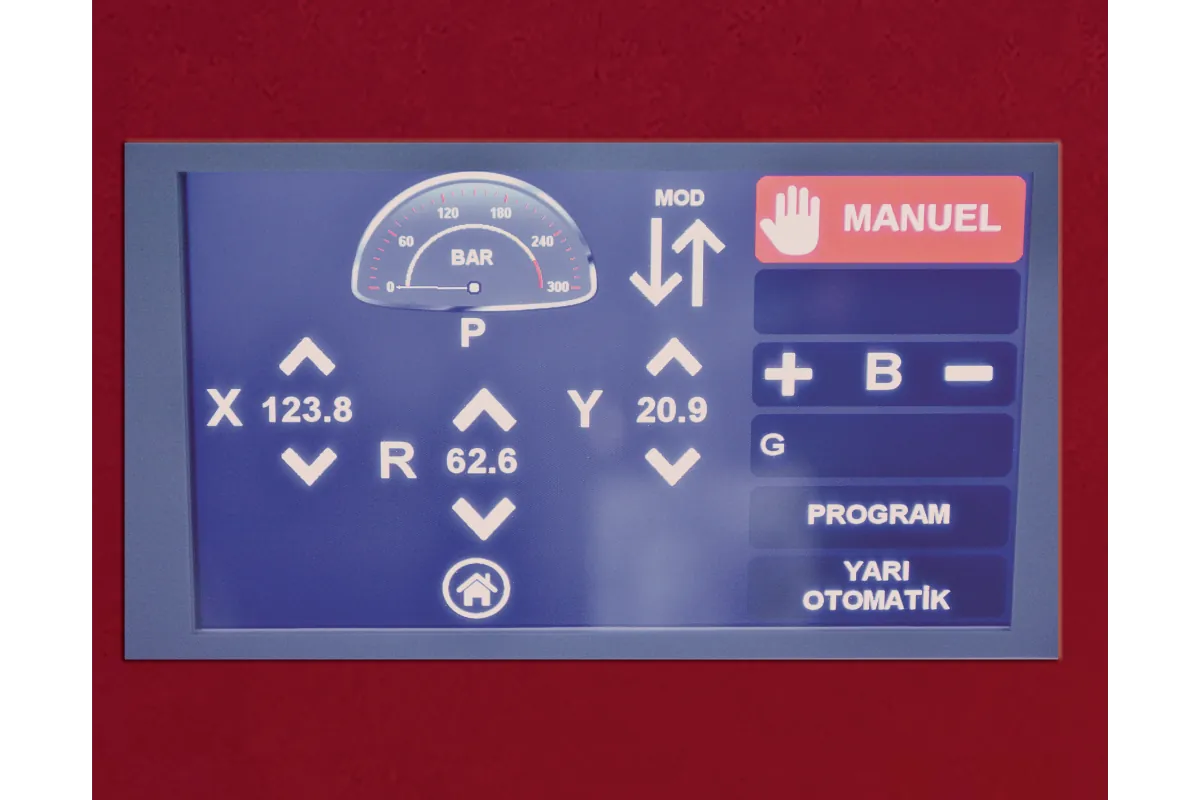
– NC control unit with 500-program storage, up to 200 lines per program, and USB program save/load
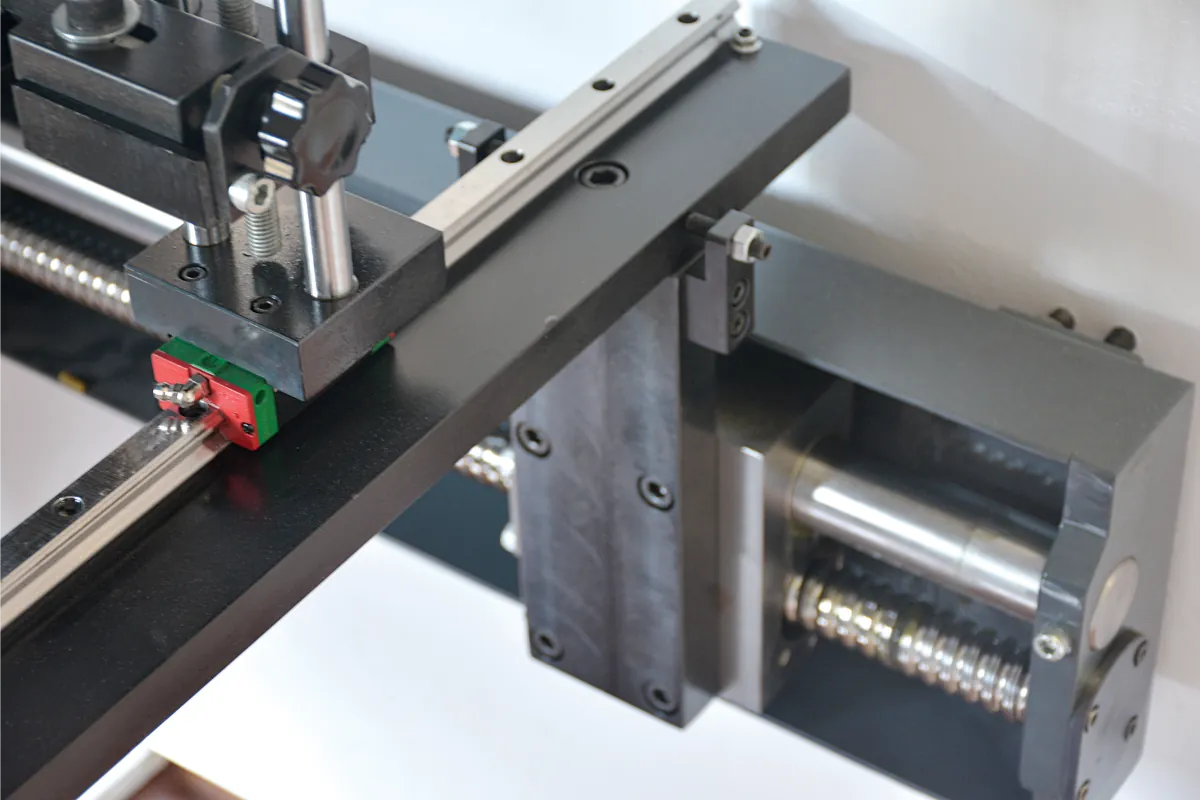
– Motorized, NC-controlled X-axis backgauge (500 mm travel on EDBM 1230; 600 mm on EDBM 1540, 2160, 2690 and 3135), with 0.2 mm X-axis backgauge positioning precision
– Motorized, NC-controlled Y-axis angle adjustment
– Programmable backgauge retreat, to help the operator avoid collisions on repeat cycles
Tooling and operator equipment
– Standard upper and lower dies
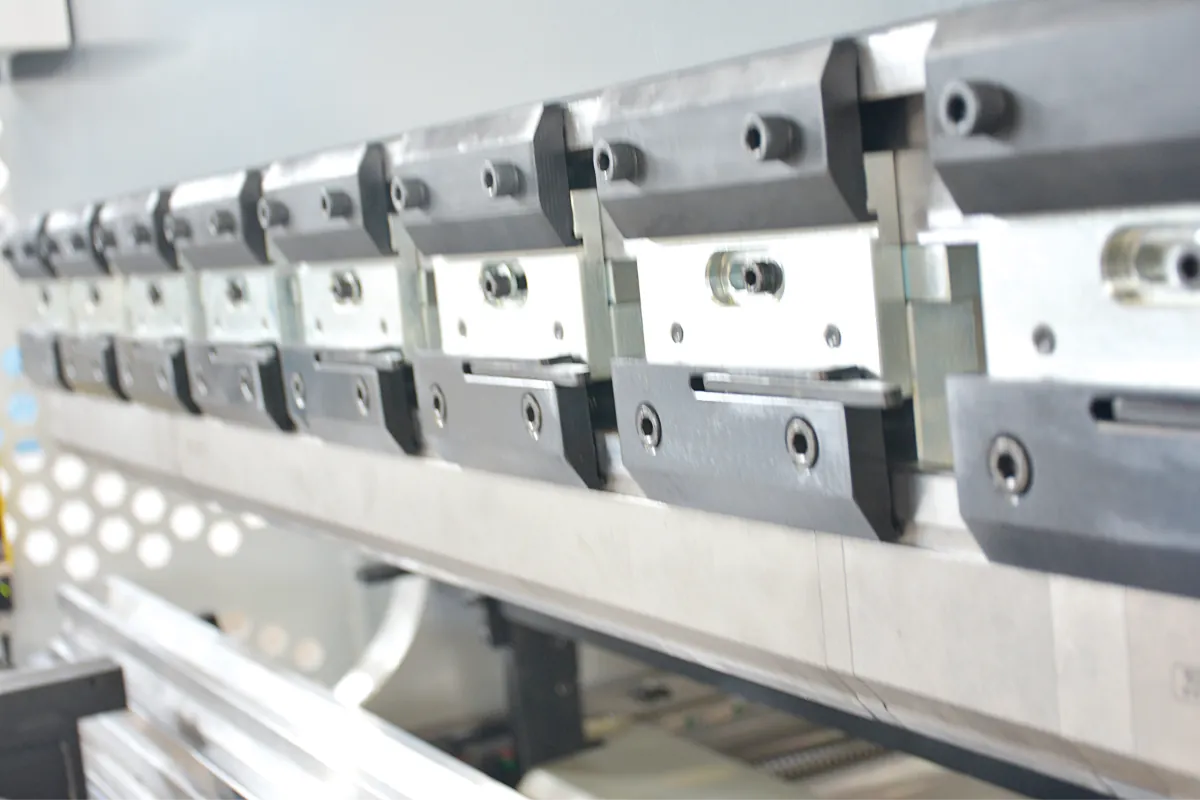
– Promecam-type quick-release upper die clamping system
– Portable/floating-arm control panel
– Front support arms, movable on a linear guide and bearing system
– Clamping and centering bolts for the lower die
Safety
– LEUZE front-area lightguard
– Emergency-stop foot pedal
– Two-hand control
– Hydraulic overpressure protection
Compliance
– Manufactured to meet CE requirements
Remote service
– Standard internet-based remote connection (see “Remote Service” below)
Optional Equipment
The following remain configuration-dependent options and are not part of EDBM’s standard scope:
– Special bending dies
– Special pedal system with combined two-hand and foot control (distinct from the standard two-hand control listed above)
– Special safety systems (DSP or FIESSLER)
– Additional backgauge length
– Extra backgauge finger
– Extra front support arm
– Motorized R-axis, with precision movement
– Manual or motorized lower-table crowning
Contact EBR METAL for the current option list and lead time for a specific model.
EDBM Technical Specifications
Values are model-specific. Read each value under the relevant model column.
| Specification | EDBM 1230 | EDBM 1540 | EDBM 2160 | EDBM 2690 | EDBM 3135 |
|---|---|---|---|---|---|
| Bending Force (ton) | 30 | 40 | 60 | 90 | 135 |
| Bending Capacity — 450 N/mm² Material (mm) | 4 | 4 | 4 | 5 | 6 |
| Bending Capacity — 700 N/mm² Material (mm) | 2 | 2 | 2 | 2.5 | 3 |
| Bending Length (mm) | 1270 | 1550 | 2100 | 2600 | 3150 |
| Distance Between Columns (mm) | 1010 | 1260 | 1700 | 2100 | 2600 |
| Stroke (mm) | 150 | 160 | 160 | 200 | 250 |
| Bending (Pressing) Speed (mm/s) | 10 | 10 | 10 | 10 | 10 |
| Approach Speed (mm/s) | 70 | 90 | 90 | 95 | 100 |
| Throat Depth (mm) | 255 | 320 | 320 | 410 | 415 |
| Daylight (mm) | 265 | 380 | 380 | 450 | 500 |
| Table Width (mm) | 130 | 100 | 100 | 100 | 100 |
| Table Height (mm) | 830 | 845 | 845 | 845 | 845 |
| X-Axis Backgauge Travel (mm) | 500 | 600 | 600 | 600 | 600 |
| Main Motor / Pump (kW) | 3 | 5.5 | 7.5 | 11 | 15 |
| X-Axis Motor (kW) | 0.55 | 0.75 | 0.75 | 0.75 | 0.75 |
| Y-Axis Motor (kW) | 0.18 | 0.37 | 0.37 | 0.37 | 0.37 |
| R-Axis Motor, Optional (kW) | 0.25 | 0.25 | 0.25 | 0.37 | 0.37 |
| Oil Tank (L) | 90 | 120 | 120 | 150 | 150 |
| Overall Length (mm) | 1760 | 2000 | 2450 | 3000 | 3600 |
| Overall Width (mm) | 1375 | 1600 | 1600 | 1750 | 1800 |
| Overall Height (mm) | 2160 | 2235 | 2235 | 2500 | 2500 |
| Weight (kg) | 1700 | 3450 | 4340 | 5900 | 7300 |
The 450 N/mm² and 700 N/mm² figures show maximum sheet thickness at two reference material tensile-strength levels, for each model individually.
Each figure applies only to the model in its column. Actual suitability for a specific job depends on material tensile strength, sheet thickness, required bending length, die V-opening, tooling and part geometry.
Send EBR METAL your material and part details for a job-specific check.
How EDBM's NC Control Differs from a CNC Press Brake
EDBM bends with a motor-adjusted mechanical-stop ram: the stroke position is set through the mechanical-stop mechanism and adjusted by motor, while pressure, tonnage and the lower stroke point are set through the NC control unit rather than by independently programming the full ram path on each side. The backgauge (X axis) and the bending angle (Y axis) are both motorized and NC-controlled, so repeat jobs can be set up and re-run without manually resetting these positions — but EDBM applies one common Y setting across the ram, rather than the independently controlled and synchronized Y1/Y2 axes found on EBR METAL’s EPBM CNC press brake series.
On EPBM, Y1 and Y2 position and synchronize the two sides of the ram independently. Additional programmable axes support more advanced production requirements. Jobs that depend on independent control of both ram sides, more programmable axes, or more advanced, higher-repeat production point toward EPBM instead.
Choosing Between the EDBM NC Press Brake and the EPBM CNC Press Brake
EDBM and EPBM cover different points on the same bending job. Move to the EPBM CNC Press Brake Series when the job needs:
– independent Y1/Y2 axis control;
– more controllable axes than EDBM’s X/Y configuration;
– more complex, fully programmed work;
– higher-repeat production with a need for consistent, programmed results across varied jobs; or
– a CNC-series feature that EDBM does not offer, or offers in a more limited form.
EBR METAL can review a technical drawing to confirm the right machine.
Hydraulic System
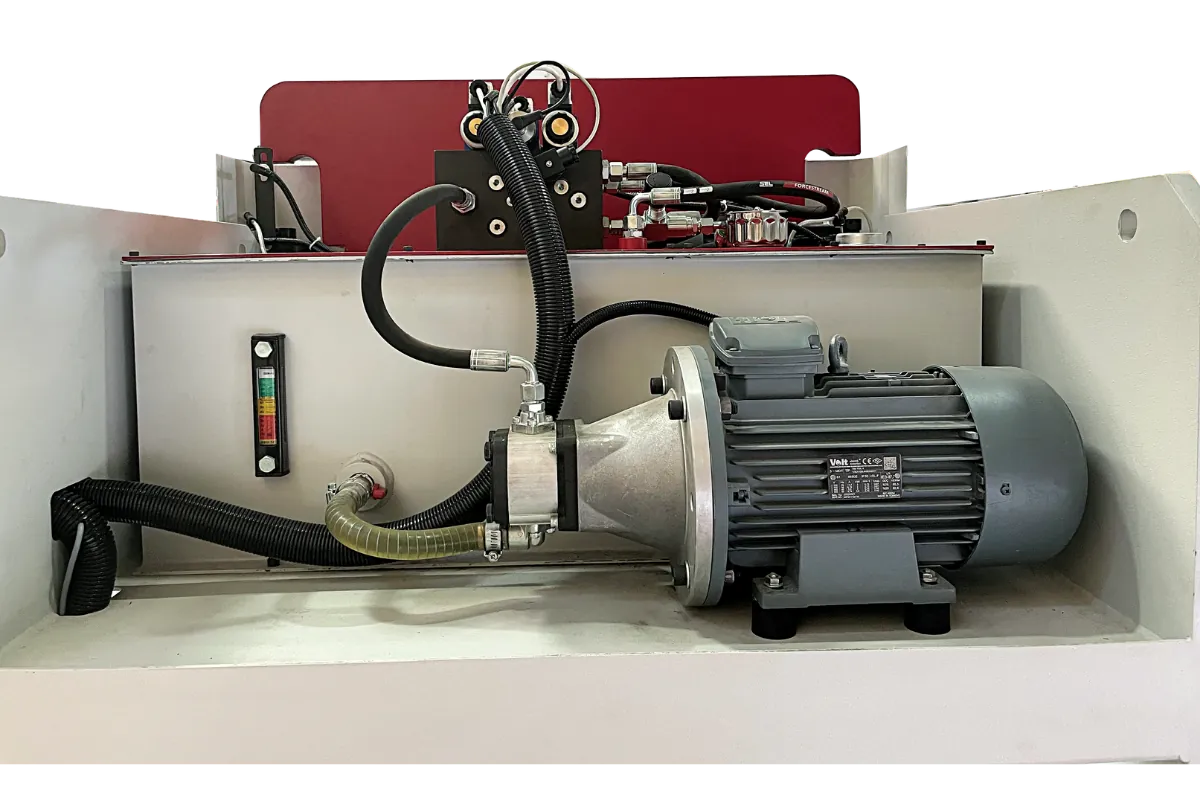
EDBM uses a compact, low-maintenance hydraulic system unit. Depending on order and supply, REXROTH, HAWE or HOERBIGER hydraulic components are used.
Remote Service
Every EDBM includes a standard internet-based remote connection, so EBR METAL’s service team can connect to the machine from anywhere with an internet connection to help diagnose an issue, guide the customer through a check or adjustment, or, where appropriate, carry out a direct remote intervention.
CE and Safety
Every EDBM press brake is manufactured to meet CE requirements. Standard safety equipment includes a LEUZE front-area lightguard, an emergency-stop foot pedal, two-hand control and hydraulic overpressure protection. Special safety systems such as DSP or FIESSLER remain optional, configured to order.
Request a Quote
Send EBR METAL your material type, material tensile strength, maximum sheet thickness, maximum bending length, a technical drawing, and the options you need, and EBR METAL will confirm the right EDBM model for the job.
Frequently Asked Questions
What is the difference between an NC press brake and a CNC press brake?
An NC press brake like EDBM bends with a motor-adjusted mechanical-stop ram and NC-controlled X and Y axes, applying one common Y setting across the ram. A CNC press brake, such as EBR METAL’s EPBM series, controls more axes independently. Separate Y1 and Y2 axes position and synchronize the two sides of the ram for more advanced, fully programmed bending.
What kind of parts is EDBM suited for?
EDBM works well for parts with mostly fixed, repeated bend angles. Z-shaped bends and tray-type parts folded on three or four sides are common examples in small and mid-sized fabrication shops.
Why does EDBM use a single Y axis instead of Y1/Y2?
EDBM’s NC control applies one common Y setting across the ram through a motor-adjusted mechanical-stop system. EPBM’s CNC control uses Y1 and Y2 to position and synchronize the two sides of the ram independently. Its additional programmable axes suit more advanced or higher-repeat production.
What do the 450 N/mm² and 700 N/mm² bending capacity figures mean?
They show the maximum sheet thickness EDBM can bend at two reference material tensile-strength levels, for each model. Actual capacity for a specific job depends on the material, thickness, bending length, die opening, tooling and part geometry.
Are the R-axis and crowning system standard on EDBM?
No. The motorized R-axis and manual or motorized lower-table crowning are optional on every current EDBM model, configured to order.
What does the standard remote service include?
An internet-based remote connection that lets EBR METAL’s service team connect to the machine, help diagnose an issue and guide the customer, or carry out a direct remote intervention where appropriate.
What should I send for an EDBM quotation?
Material type, material tensile strength, maximum sheet thickness, maximum bending length, a technical drawing of the part, and any options you need.