



Sheet Metal Cutting Machines
EBR METAL manufactures sheet metal cutting machines for a range of fabrication requirements, from manually operated workshop machines to motorized and CNC-controlled guillotine shears for industrial production. The range includes hydraulic CNC, direct-gear motorized, motorized and hand-lever guillotine shears, along with circular cutting machines for applications where the required operation is circular rather than straight sheet cutting.
Choosing the right machine depends on the material and how it will be used in production.
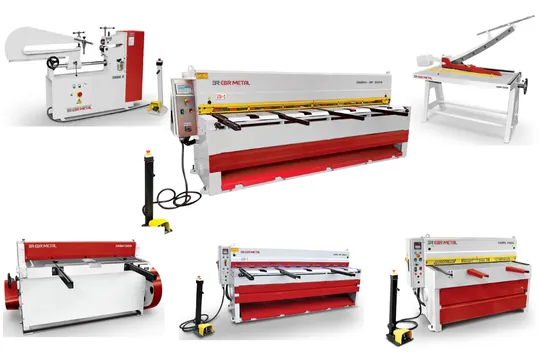
EBR METAL manufactures sheet metal cutting machines for a range of fabrication requirements, from manually operated workshop machines to motorized and CNC-controlled guillotine shears for industrial production. The range includes hydraulic CNC, direct-gear motorized, motorized and hand-lever guillotine shears, along with circular cutting machines for applications where the required operation is circular rather than straight sheet cutting.
Choosing the right machine depends on the material and how it will be used in production.
Industrial Sheet Metal Cutting Solutions
Sheet metal cutting is one of the basic operations in metal fabrication. The right machine depends on more than maximum cutting capacity — material, sheet dimensions and how the machine will be used in production all play a part.
Cutting Solutions at a Glance
For lower-volume or lighter-duty work, a manually operated machine may be sufficient. Motorized and direct-gear machines suit repetitive straight cutting, while hydraulic CNC guillotine shears are used where programmable control, thicker sheet or longer cutting lengths are needed.
The sections below outline each machine family in EBR METAL’s cutting range.
Explore Sheet Metal Cutting Machine Types
EBR METAL’s cutting range covers different production requirements, from manual workshop cutting to high-cycle mechanical shearing and CNC-controlled hydraulic cutting. Compare the machine families below to find the most suitable starting point for your application.
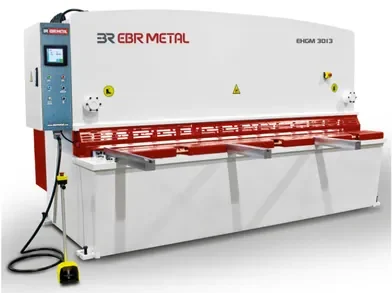
Hydraulic CNC / NC Guillotine Shears
For thicker sheet, longer cutting lengths and applications requiring NC / CNC-controlled operation. NC / CNC control lets the operator set cutting parameters and backgauge position for the job.
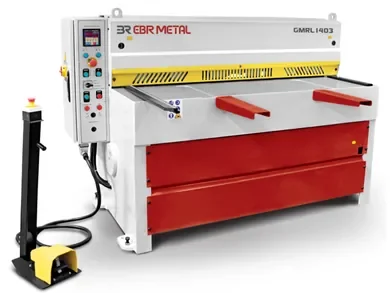
Direct Gear Motorized Guillotines Shears
Fast, economical straight cutting for repetitive thinner-sheet production, with low operating and maintenance costs. GMRH and GMRL series are also available with Return to Sender configurations.
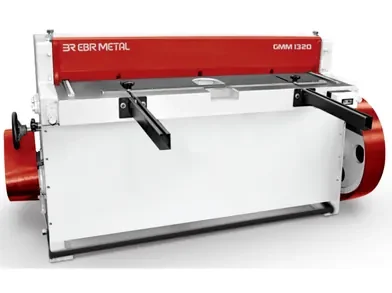
Motorized Guillotine Shears
Flywheel-driven eccentric shears designed for very high cutting counts within their capacity range. Reaches faster cutting cycles than direct-gear machines within its capacity range.
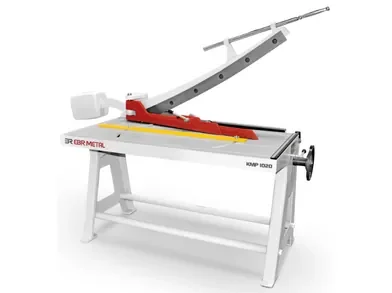
Hand-Lever Guillotine Shears
Simple manual cutting for workshops, HVAC fabrication and site work. Keeps simple cuts off a larger hydraulic or direct-gear machine.
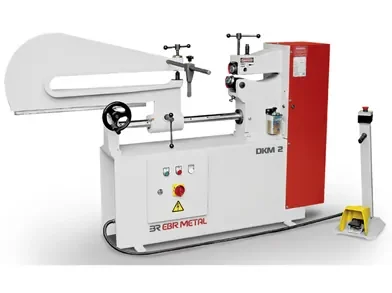
Circular Cutting Machines (Related Cutting Solution)
For circular blanks and circular sheet processing rather than straight shearing. The range includes machines for circular cutting and models that also perform edge flanging.
More About the Cutting Machine Families
CNC control lets the operator set cutting parameters and backgauge position according to the material and job at hand.
For repetitive thinner-sheet production, EBR’s Direct-Gear range includes GMRH and GMRL series machines, together with GMRH-RF and GMRL-RF versions. RF models return cut pieces up to 400 mm to the operator side of the machine instead of requiring a trip to the rear to retrieve them.
Motorized GMM machines can reach faster cutting cycles than direct-gear machines within their cutting-length and capacity range. The Direct-Gear configuration, however, offers advantages in maintenance and operating simplicity and is now also used by EBR for many cut-to-length and automatic-line applications.
Hand-lever guillotine shears are also used in larger workshops for simple cuts within their capacity, rather than tying up a larger hydraulic or direct-gear machine.
How to Choose the Right Sheet Metal Cutting Machine
Selecting a sheet metal cutting machine starts with the job itself. When reviewing a requirement, EBR normally looks at material type, minimum and maximum thickness, required cutting length, production volume, required cutting accuracy and the intended application before recommending a machine.
Material Type
Material type affects the required machine capacity and cutting conditions. Applications EBR works with commonly involve carbon steel, stainless steel, copper and aluminium, among others, depending on the machine. Where more than one material or thickness range is involved, each combination should be specified separately, since capability varies by machine and model.
Sheet Thickness
Required thickness is one of the main factors in machine selection, and capacity varies between machine families and individual models — direct-gear machines generally cover thinner sheet, while hydraulic guillotine shears are used for thicker material. Match the required thickness against the specification of the machine under consideration.
Cutting Length
The required cutting length determines the working length needed from the machine. EBR’s direct-gear range covers shorter to mid-range lengths; longer cutting lengths are generally covered by hydraulic guillotine shears. Thickness and cutting length should be considered together when selecting a model.
Production Volume and Application
Production volume and intended use go together. A steel service center running high-volume, repetitive cutting has different requirements from a workshop making a limited number of cuts for its own production, even if the material and thickness are similar. Volume and application together help determine whether a hand-lever, motorized, direct-gear or hydraulic CNC machine is the right fit.
Control, Operation and Accuracy
The required level of operator control, automation and cutting accuracy is a further factor. Depending on the application, this may range from manual operation to motorized cutting or CNC-controlled positioning and cutting parameters.
For circular blanks or circular sheet processing instead of straight shearing, see Circular Cutting and Flanging above.
Materials and Applications
Customer applications discussed with EBR typically involve carbon steel, stainless steel, aluminium and copper, at different thicknesses depending on the job.
Common Applications
Typical applications include preparing sheet material for subsequent fabrication, producing straight-cut parts and blanks, and repetitive cutting in metalworking and manufacturing environments.
Material and Machine Suitability
Machine suitability depends on the selected family, model and material combination — not every model covers every material or thickness.
Why EBR METAL for Sheet Metal Cutting Machines?
EBR METAL manufactures several cutting machine families and helps determine the right one for the application rather than fitting different jobs into a single machine type.
Application-Specific Machine Configurations
For cut-to-length and automatic production lines, EBR can supply direct-gear guillotine configurations — and, for suitable projects, hydraulic configurations — adapted to the line design, including the option to omit components such as a standalone electrical cabinet or backgauge where they are not required for integration.
Spare Parts and Warranty Support
EBR maintains spare parts stock for its cutting machines and responds to spare-parts requirements according to availability. Warranty terms vary by machine family: Direct-Gear and Hand-Lever Guillotine Shears are supplied with a two-year warranty, while Hydraulic Guillotine Shears are supplied with a one-year warranty.
Request a Cutting Machine Recommendation
If you are not sure which cutting machine or model is suitable for your application, send us the main details of the job.
What to Send Us
Please include, where available:
- Material type and, if more than one material is involved, the minimum and maximum thickness for each;
- Required cutting length;
- Expected production volume;
- Required cutting accuracy; and
- Intended application or use.
EBR METAL can review these requirements against the available machine families and model configurations.
Frequently Asked Questions About Sheet Metal Cutting Machines
What is a sheet metal cutting machine?
A sheet metal cutting machine is used to separate sheet material to the required dimensions before or during fabrication. Depending on the application, cutting may be carried out with manual, motorized, mechanically driven or hydraulic CNC equipment.
How do I choose the right sheet metal cutting machine?
Start with the material and thickness range, required cutting length and the accuracy needed, then factor in production volume and how the machine will be used — a service center running repetitive cuts has different requirements than a workshop cutting occasionally, even at similar material and thickness.
What is the difference between hydraulic and motorized guillotine shears?
Hydraulic CNC guillotine shears generally handle thicker sheet and longer cutting lengths, with CNC-controlled parameters. Direct-gear motorized shears generally cover thinner sheet, with lower operating and maintenance costs and simpler operation, while motorized GMM shears use a flywheel-driven eccentric principle suited to very high cutting counts within a more limited capacity range.
The right choice depends on the actual material, thickness, cutting length and production requirement, not the drive type alone.
Which EBR METAL machine should I choose for repetitive industrial cutting?
It depends on thickness, cutting length and cutting count. Direct-gear machines suit repetitive thinner-sheet production with lower operating costs; motorized GMM machines suit very high cutting counts within their capacity range, such as cutting lines; hydraulic CNC machines suit repetitive cutting at greater thickness or cutting length.
Compare the relevant family and model specifications before deciding.
Does EBR METAL offer machines for circular sheet cutting?
A circular cutting machine is used when flat sheet must be cut into discs or circular blanks rather than straight rectangular parts. If the operation also involves trimming or edge flanging a preformed or dished component, the application should be evaluated under the relevant circular cutting and flanging machine family.